


Page 57 - ARNM-3-3
P. 57
Advances in Radiotherapy
            & Nuclear Medicine                                                 LuPSMA response patterns on PSMA PET


                    A                                                A


                    B
                                                                     B


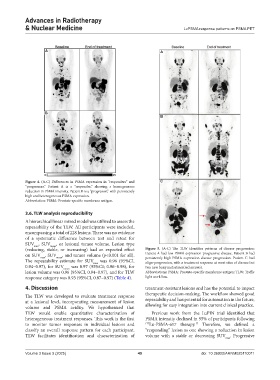
            Figure  4. (A-C) Differences in PSMA expression in “responders” and   C
            “progressors.” Patient A is a “responder,” showing a homogeneous
            reduction in PSMA intensity. Patient B is a “progressor,” with persistently
            high and heterogeneous PSMA expression.
            Abbreviation: PSMA: Prostate-specific membrane antigen.

            3.6. TLW analysis reproducibility
            A hierarchical linear mixed model was utilized to assess the
            repeatability of the TLW. All participants were included,
            encompassing a total of 228 lesions. There was no evidence
            of  a systematic  difference  between  test  and  retest for
            SUV , SUV mean , or lesional tumor volume. Lesion type
               max
            (reducing,  stable,  or  increasing)  had  an  expected  effect   Figure  5. (A-C) The TLW identifies patterns of disease progression:
            on SUV , SUV mean , and tumor volume (p<0.001 for all).   Patient A had low PSMA expression progressive disease. Patient B had
                  max
                                                               persistently high PSMA expression disease progression. Patient C had
            The repeatability estimate for SUV  was 0.96  (95%CI,   oligo-progression, with a treatment response at most sites of disease but
                                         max
            0.94–0.97), for SUV mean  was 0.97 (95%CI; 0.96–0.98), for   two new bony metastases(red arrows).
            lesion volume was 0.96 (95%CI, 0.94–0.97), and for TLW   Abbreviations: PSMA: Prostate-specific membrane antigen; TLW: Traffic
            response category was 0.93 (95%CI, 0.87–0.97) (Table 4).  light workflow.
            4. Discussion                                      treatment-resistant lesions and has the potential to impact
            The TLW was developed to evaluate treatment response   therapeutic decision-making. The workflow showed good
            at a lesional level, incorporating measurement of lesion   repeatability and has potential for automation in the future,
            volume and PSMA avidity. We hypothesized that      allowing for easy integration into current clinical practice.
            TLW would enable quantitative characterization of    Previous work from the LuPIN trial identified that
            heterogeneous treatment responses. This work is the first   PSMA intensity declined in 95% of participants following
            to monitor tumor responses in individual lesions and   177 Lu-PSMA-617 therapy.  Therefore, we defined a
                                                                                    17
            classify an overall response pattern for each participant.   “responding” lesion as one showing a reduction in lesion
            TLW facilitates identification and characterization of   volume with a stable or decreasing SUV . Progressive
                                                                                                 max


            Volume 3 Issue 3 (2025)                         49                         doi: 10.36922/ARNM025110011

