


Page 57 - BH-2-2
P. 57
Brain & Heart                                              Cerebral venous sinus assessment using MRI and CT


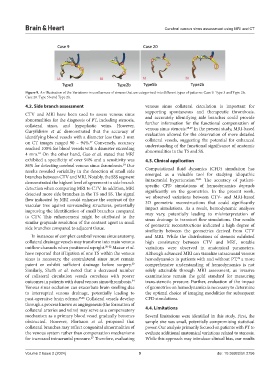
            Figure 9. An illustration of the Variations in confluences of sinuses that are categorized into different types of patterns: Case 9. Type 3 and Type 2b;
            Case 20. Type 5b and Type 2b.
            4.2. Side branch assessment                        venous sinus collateral circulation is important for

            CTV and MRI have been used to assess venous sinus   supporting spontaneous and therapeutic thrombosis,
            abnormalities for the diagnosis of PT, including stenosis,   and accurately identifying side branches could provide
            collateral sinus, and hypoplastic veins. However,   further information for the functional compensation of
                                                                                28,29
            Guryildirim  et al. demonstrated that the accuracy of   venous sinus stenosis.   In the present study, MRI-based
            identifying blood vessels with a diameter less than 3 mm   evaluation allowed for the observation of more detailed
                                                               collateral vessels, suggesting the potential for enhanced
            on CT images ranged 90 – 94%.  Conversely, accuracy   understanding of the functional significance of anatomic
                                       17
            reached 100% for blood vessels with a diameter exceeding   abnormalities in the TS and SS.
            4  mm.  On the other hand, Gao  et al. stated that MRI
                 18
            exhibited a specificity of over 94% and a sensitivity was   4.3. Clinical application
            86% for detecting cerebral venous sinus thrombosis.  Our
                                                     19
            results revealed variability in the detection of small side   Computational fluid dynamics (CFD) simulation has
            branches between CTV and MRI. Notably, the SSS segment   emerged as a valuable tool for studying  idiopathic
                                                                                    30,31
            demonstrated the highest level of agreement in side branch   intracranial hypertension.   The accuracy of patient-
            detection when comparing MRI to CTV. In addition, MRI   specific CFD simulations of hemodynamics depends
            detected more side branches in the TS and SS. The signal   significantly on the geometries. In the present work,
            flow indicated by MRI could enhance the contrast of the   we observed variations between CTV-  and MRI-based
                                                               3D geometric reconstructions that could significantly
            vascular tree against surrounding structures, potentially   impact simulations. As a result, hemodynamic analyses
            improving the identification of small branches compared   may vary, potentially leading to misinterpretation of
            to CTV. This enhancement might be attributed to the   sinus drainage in transient flow simulations. Our results
            similar grayscale resolution of the contrast agent in small   of geometric reconstructions indicated a high degree of
            side branches compared to adjacent tissue.
                                                               similarity between the geometries derived from CTV
              In instances of complex cerebral venous sinus anatomy,   and  MRI.  While  the  distributions  of  stenosis  exhibited
            collateral drainage vessels may transform into main venous   high consistency between CTV and MRI, notable
            outflow channels when positioned upright. 20-22  Mazur et al.   variations were observed in anatomical parameters.
            have reported that if ligation of one TS within the venous   Although advanced MRI can visualize intracranial venous
            sinus is necessary, the contralateral sinus must remain   hemodynamics in patients with and without PT,  a more
                                                                                                      32
                                                         23
            patent or exhibit sufficient drainage before surgery.    comprehensive understanding of hemodynamics is not
            Similarly, Sheth  et al. noted that a decreased number   solely attainable through MRI assessment, as invasive
            of collateral circulation vessels correlates with poorer   examinations remain the gold standard for measuring
            outcomes in patients with dural venous sinus thrombosis.    trans-stenotic pressure. Further, evaluation of the impact
                                                         24
            Venous sinus occlusion can exacerbate brain swelling due   of geometries on hemodynamics is necessary to determine
            to interrupted venous drainage, potentially leading to   the optimal choice of imaging modalities for subsequent
            post-operative brain edema. 25,26  Collateral vessels develop   CFD simulations.
            through a process known as angiogenesis (the formation of
            collateral arteries and veins) may serve as a compensatory   4.4. Limitations
            mechanism as a primary blood vessel gradually becomes   Several limitations  were  identified in  this  study.  First,  the
            obstructed.  However,  Florisson  et al.  proposed  that   sample size was small, potentially compromising statistical
            collateral branches may reflect congenital abnormalities of   power. Our analysis primarily focused on patients with PT to
            the venous system rather than compensation mechanisms   evaluate additional anatomical variations related to stenosis.
            for increased intracranial pressure.  Therefore, evaluating   While this approach may introduce clinical bias, our results
                                        27

            Volume 2 Issue 2 (2024)                         9                                doi: 10.36922/bh.2756

