


Page 121 - DP-2-2
P. 121
Design+                                                          Transposing human action research to design


              This required subjects to develop suitable geometry   extend of fulfillment of that objective, leading to another
            rationalization strategies during their design processes.   cycle with the same pattern. 60,61
            To capture the development of these strategies, we asked   We transcribed, segmented, and coded the observed
            the subjects to concurrently think-aloud during their   design processes and recorded these data in protocol tables.
            digital design processes. 52-54  Following initial supervised   These tables are structured temporally along vertical time
            technical setup stages, we observed the design processes of   axes, as shown in Table 2. Once coded, we linked actions
            all six individual subjects remotely via video conferencing   using the linkography notation. In this  diagramming
            software. Each of the six design processes lasted between   approach, recorded actions and ideas from segmented
            60 and 105  min. During these processes, we collected   protocol data are mapped and linked chronologically,
            qualitative data in the form of audio and video recordings,   resulting in bottom-up, quantitative depictions of design
            which were transcribed and consolidated in two parts:   activity within distinct time frames.  Using this method,
                                                                                            61
            Records of observable actions in the external environment   we determined links such as “backlinks” and “forelinks”
            (freehand sketching as well as interactions with Rhino3D   among the recorded actions, as shown in the “Linkograph”
            and Grasshopper) and transcripts of recorded think-aloud   column of Table 2. 61
            thought process verbalizations.
                                                                 Based on the initial version of these linkographs, we
              In contrast to Tetris, with its well-defined goals and
            metrics, the design here was characterized as ill-defined   further examined pertinent verbalizations of identified
                                                               design objectives as well as their respective possible
            and open-ended goals with an absence of units to   fulfillments to categorize each as either epistemic or
            measure and analyze actions. 15,55  For this reason, design   pragmatic. For this categorization process, we employed
            processes could neither be segmented into predefined
            temporal episodes nor evaluated in terms of known,   a reasoning approach known as “inference to the
                                                               best explanation.”
                                                                                 The “evidence” we used for this
                                                                              67-69
            well-defined goals.  To identify different types of action,   categorization included qualitative indicators from the
                           55
            and to understand their possible interplay in the design   recorded design protocols, and quantitative indicators (i.e.,
            process, we aimed to analytically discern pragmatic   backlinks and forelinks) from the linkographs. For example,
            and epistemic design episodes by determining links
            between pragmatic and epistemic “objectives” (i.e., goal   a subject verbalized an objective to “act in order to see what
            setting) and “fulfillments” (i.e., goal attainment). 56,57  To   the action leads to,” and engaged in “explorative moves”
            this  end,  we  analyzed  the  datasets  we  acquired  using  a   (“What if…?”), we categorized the respective objective
                                                               as epistemic.
                                                                              In contrast, if a subject verbalized an
                                                                         70(p145)
            coding scheme (Table 1) based on Schön’s  reflective   objective to act “in order to produce an intended change,”
                                                 45
            practice theory and the linkography method developed
            by Goldschmidt 58,59  (Table 2). Linkography is a method   and engaged in “move-testing” actions (“Let’s do x.”), we
                                                                                                      71(p146)
            used to visually represent and analyze the “how” and   categorized the respective objective as pragmatic.
            “what” of design processes. The coding scheme represents   To categorize the fulfillments, we examined instances
            each design episode identified by the coder as consisting   in which subjects reflect on their designed “geometry” (i.e.,
            of “microlevel” actions starting with a subject’s setting   “proposal” or “solution”) present in one of the observed
            of an objective, followed by “move experiments” toward   external environments. If we observed the geometry
            fulfilling the stated objective, then by a reflection on the   remaining “fixed” (i.e., it had stopped evolving) and forming

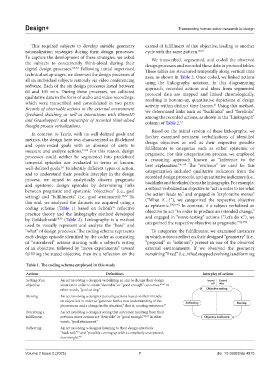
            Table 1. The coding scheme employed in this study
            Actions                           Definitions                              Interplay of actions
            Setting of an   An act involving a designer verbalizing an aim to change their design
            objective      situation in order to attain “desirable” or “good enough” outcomes. 62,63  In
                           other words, “goal setting.”
            Moving         An act involving a designer pursuing actions based on their initially
                           set objectives in order to “generate both a new understanding of the
                           phenomena and a change in the situation,” that is, creating outcomes. 61
            Perceiving a   An act involving a designer seeing that outcomes resulting from their
            fulfillment    previous move actions are “desirable” or “good enough.” 56,64  In other
                           words, “goal attainment.”
            Reflecting     An act involving a designer listening to their design situation’s
                                  65
                           “back-talk”  and “possibly coming up with a completely unexpected,
                           new insight.” 66

            Volume 2 Issue 2 (2025)                         7                                doi: 10.36922/dp.4875

