


Page 60 - DP-2-3
P. 60
Design+                                                                 Design chatbot using activity theory


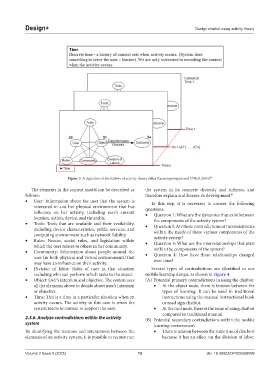
                              Figure 3. A depiction of the history of activity theory (after Kaenampornpan and O’Neil, 2004) 39

              The elements in the context model can be described as   the system in its concrete diversity and richness, and
            follows:                                           therefore explain and foresee its development 36
            •   User: Information about the user that the system is   In this  step, it is  necessary to answer  the following
               interested in and her physical environment that has   questions:
               influence on her activity, including user’s current   •   Question 1: What are the dynamics that exist between
               location, action, device, and timetable.
            •   Tools: Tools that are available and their availability,   •   the components of the activity system?
                                                                  Question 2: Are there contradictions or inconsistencies
               including device characteristics, public services, and   within the needs of these various components of the
               computing environment such as network liability.
            •   Rules: Norms, social rules, and legislation within   •   activity system?
                                                                  Question 3: What are the interrelationships that exist
               which the user relates to others in her community.
            •   Community:  Information  about  people  around  the   within the components of the system?
               user (in both physical and virtual environments) that   •   Question 4: How have these relationships changed
               may have an influence on their activity.           over time?
            •   Division of labor: Roles of user in that situation   Several  types  of  contradictions  are  identified  in  our
               including who can perform which tasks to the object.  mobile learning design, as shown in Figure 4.
            •   Object: User’s intention and objective. The system uses   (A)  Potential primary contradictions in using the chatbot
               all the elements above to decide about user’s intention   •   At the object node, there is tension between the
               or objective.                                          types of learning. It can be used in traditional
            •   Time: This is a time in a particular situation when an   instructions using the manual instructional book
               activity occurs. The activity in this case is when the   or road sign chatbot.
               system reacts to context to support the user.      •   At the tool node, there is the issue of using chatbot
                                                                      compared to traditional manual.
            2.3.6. Analyze contradictions within the activity   (B)  Potential secondary contradictions within the mobile
            system                                                learning environment
            By identifying the tensions and interactions between the   •   There is tension between the rules (use of chatbot)
            elements of an activity system, it is possible to reconstruct   because it has an effect on the division of labor.


            Volume 2 Issue 3 (2025)                         10                           doi: 10.36922/DP025060009

