


Page 19 - EER-1-1
P. 19
Explora: Environment
            and Resource                                                        WTW emissions of road and rail transport


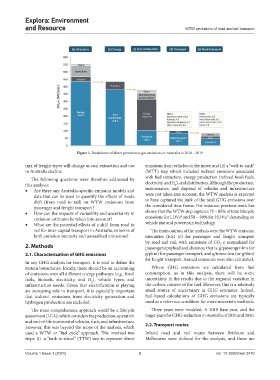
                                  Figure 1. Breakdown of direct greenhouse gas emissions in Australia in 2018 – 2019

            mix of freight types will change as coal extraction and use   emissions from vehicles on the move, and (ii) a “well-to-tank”
            in Australia decline.                              (WTT) step which included indirect emissions associated
              The following questions were therefore addressed by   with fuel extraction, energy production (refined fossil fuels,
            this analysis:                                     electricity, and H ), and distribution. Although the production,
                                                                           2
            •   Are there any Australia-specific emission models and   maintenance, and disposal of vehicles and infrastructure
               data that can be used to quantify the effects of mode   were not taken into account, the WTW analysis is expected
               shift (from road to rail) on WTW emissions from   to have captured the bulk of the total GHG emissions over
               passenger and freight transport?                the considered time frame. For instance, previous work has
            •   How can the impacts of variability and uncertainty in   shown that the WTW step captures 75 – 85% of total lifecycle
                                                                                                  9
                                                                              8
               emission estimates be taken into account?       emissions for LDVs  and 50 – 90% for HDVs,  depending on
            •   What are the potential effects of a shift from road to   vehicle size and powertrain technology.
               rail for inter-capital transport in Australia, in terms of   The main outputs of the analysis were the WTW emission
               both emission intensity and annualized emissions?  intensities (EIs) (ε) for passenger and freight transport
                                                               by road and rail, with emissions of CO -e normalized for
            2. Methods                                         passengers/payload and distance, that is, g/passenger-km (or
                                                                                               2
            2.1. Characterization of GHG emissions             g/pkm) for passenger transport, and g/tonne-km (or g/tkm)
                                                               for freight transport. Annual emissions were also calculated.
            In any GHG analysis for transport, it is vital to define the
            system boundaries. Ideally, there should be an accounting   Where GHG emissions are calculated from fuel
            of emissions over all different energy pathways (e.g., fossil   consumption, as in this analysis, there will be some
            fuels, biofuels, electricity, and H ), vehicle types, and   uncertainty in the results due to the regional variation in
                                        2
            infrastructure needs. Given that electrification is playing   the carbon content of the fuel. However, this is a relatively
            an increasing role in transport, it is especially important   small source of uncertainty in GHG estimates. Indeed,
            that indirect emissions from electricity generation and   fuel-based calculations of GHG emissions  are typically
            hydrogen production are included.                  used as a reference condition for more uncertain methods.
              The most comprehensive approach would be a lifecycle   Three years were modeled: A  2019 base year, and the
            assessment (LCA), which considers the production, operation   target years for GHG-reduction in Australia of 2030 and 2050.
            and end-of-life treatment of vehicles, fuels, and infrastructure.
            However, this was beyond the scope of the analysis, which   2.2. Transport routes
            used a WTW or “fuel cycle” approach. This involved two   Inland road and rail routes between Brisbane and
            steps: (i)  a “tank-to-wheel” (TTW) step to represent direct   Melbourne were defined for the analysis, and these are


            Volume 1 Issue 1 (2024)                         3                                doi: 10.36922/eer.3470

