


Page 104 - EER-2-1
P. 104
Explora: Environment
            and Resource                                                                    Artificial neural networks


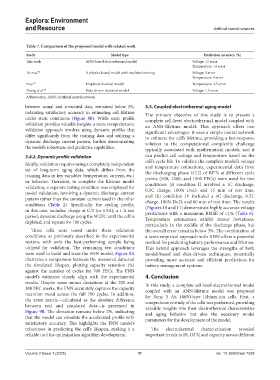
            Table 7. Comparison of the proposed model with related work
            Study                               Model type                              Prediction accuracy (%)
            This work                ANN-based electrothermal model                Voltage: <2 error
                                                                                   Temperature: <3 error
            Tu et al. 58             A physics-based model with machine learning   Voltage: 3 error
                                                                                   Temperature: 4 error
            Pour 59                  Empirical thermal model                       Temperature: 2.5 error
            Zhang et al. 60          Data-driven electrical model                  Voltage: 1.5 error
            Abbreviation: ANN: Artificial neural network.

            between actual and simulated data, remained below 3%,   3.5. Coupled electrothermal aging model
            indicating satisfactory accuracy in estimating cell lifetime   The primary objective of this study is to present a
            under static conditions (Figure  8B). While static profile   complete cell-level electrothermal model coupled with
            validation provides valuable insights, a more comprehensive   an  ANN-lifetime  model.  This  approach offers two
            validation approach involves using dynamic profiles that   significant advantages: it uses a simple neural network
            differ significantly from the training data and utilizing a   to estimate the cell’s lifetime, providing a fast-response
            dynamic discharge current pattern, further demonstrating   solution to the computational complexity challenge
            the model’s robustness and predictive capabilities.  typically  associated  with mathematical models,  and it

            3.4.2. Dynamic profile validation                  can predict cell voltage and temperature based on the
            Ideally, validation requires using a completely independent   cell’s cycle life. To validate the complete model’s voltage
                                                               and temperature estimations, experimental data from
            set of long-term aging data, which differs from the
            training data in key variables (temperature, current, etc.)   the discharging phase (C/2) of RPTs at different cycle
                                                               points (500, 1000, and 1500 FECs) were used for two
            or behavior. Therefore, to complete the lifetime model   conditions: (i) condition II involved a 1C discharge,
            validation, a separate testing condition was employed for   0.5C charge, 100% DoD, and 15  min of rest time,
            model validation, involving a dynamic discharge current   and (ii) condition IV included a 4C discharge, 0.5C
            pattern rather than the constant current used in the other   charge, 100% DoD, and 60 min of rest time. The results
            conditions  (Table  2).  Specifically, the  cycling  profile,   (Figures 10 and 11) demonstrate highly accurate voltage
            in this case, includes: charge at C/2 (or 1.5A); a 1 h rest   predictions with a maximum RMSE of <1% (Table 6).
            period; dynamic discharge using the WLTC until the cell is   Temperature estimations exhibit minor deviations,
            depleted; and repeats for 100 cycles.
                                                               particularly in the middle of the discharge phase, but
              Three cells were tested under these validation   the overall error remains below 3%. The combination of
            conditions, as previously described in the experimental   a semi-empirical approach with ANN offers a powerful
            section, with only the best-performing sample being   method for predicting battery performance and lifetime.
            utilized for validation. The remaining test conditions   This hybrid approach leverages the strengths of both
            were used to build and train the FNN model, Figure 9A   model-based and data-driven techniques, potentially
            illustrates a comparison between the measured data and   providing more accurate and efficient predictions for
            the simulated lifespan, plotting capacity retention (%)   battery management systems.
            against the number of cycles for 700 FECs. The FNN
            model’s estimates closely align with the experimental   4. Conclusion
            results. Despite some minor deviations at the 200 and   In this study, a complete cell-level electrothermal model
            300 FEC marks, the FNN accurately captures the capacity   coupled with an ANN-lifetime model was proposed
            retention trend across the full 700  cycles. In addition,   for Sony 3 Ah 18650-type lithium-ion cells. First, a
            the error metric—calculated as the absolute difference   comprehensive study of the cells was performed, providing
            between real and simulated data—is presented in    valuable insights into their electrothermal characteristics
            Figure  9B. The deviation remains below 2%, indicating   and aging behavior but also the necessary model
            that the model can simulate the accelerated profile with   parameters for the development of the model.
            satisfactory accuracy. This highlights the FNN model’s
            robustness in predicting the cell’s lifespan, making it a   The  electrothermal  characterization  revealed
            reliable tool for optimization algorithm development.  important trends in IR, OCV, and capacity across different


            Volume 2 Issue 1 (2025)                         11                               doi: 10.36922/eer.7228

