


Page 99 - EER-2-1
P. 99
Explora: Environment
            and Resource                                                                    Artificial neural networks


            Table 3. Capacity of Sony 3 Ah at different C‑rates and   A
            temperatures
            C‑rate        Capacity at different temperatures (Ah)
                    −10°C   10°C  25°C   35°C   45°C  60°C
            C/5      2.46   2.74   2.96  3.04   3.09   3.11
            C/4      2.46   2.73   2.94  3.03   3.08   3.10
            C/3      2.43   2.72   2.93  3.02   3.07   3.09
            C/2      2.42   2.72   2.90  3.01   3.06   3.08
            1C       2.50   2.71   2.88  2.99   3.05   3.07
            2C       2.52   2.70   2.86  2.99   3.04   3.06
                                                                     B

            Table 4. Specific heat capacity of Sony 3 Ah at different
            temperatures

            Temperature (°C)         Specific heat capacity (J/kg°C)
            −10                               1275
            10                                1258
            25                                1280
            35                                1269
            45                                1274
            60                                1282

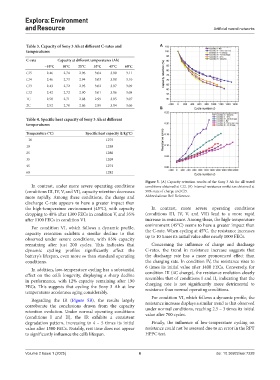
                                                               Figure 5. (A) Capacity retention results of the Sony 3 Ah for all tested
              In  contrast, under more  severe  operating conditions   conditions obtained at C/2. (B) Internal resistance evolution obtained at
            (conditions III, IV, V, and VI), capacity retention decreases   50% state of charge and C/5.
            more rapidly. Among these conditions, the charge and   Abbreviations: Ref: Reference.
            discharge C-rate appears to have a greater impact than
            the high-temperature environment (45°C), with capacity   In  contrast,  more  severe  operating  conditions
            dropping to 40% after 1300 FECs in condition V, and 35%   (conditions III, IV, V, and VII) lead to a more rapid
            after 1100 FECs in condition VI.                   increase in resistance. Among these, the high-temperature
              For condition VI, which follows a dynamic profile,   environment (45°C) seems to have a greater impact than
            capacity retention exhibits a similar decline to that   the C-rate. When cycling at 45°C, the resistance increases
            observed under severe conditions, with 85% capacity   up to 10 times its initial value after nearly 1000 FECs.
            remaining after just 200  cycles. This indicates that   Concerning the influence of charge and discharge
            dynamic cycling profiles significantly affect the   C-rates, the trend in resistance increase suggests that
            battery’s lifespan, even more so than standard operating   the discharge rate has a more pronounced effect than
            conditions.                                        the charging rate. In condition IV, the resistance rises to
              In addition, low-temperature cycling has a substantial   6 times its initial value after 1400 FECs. Conversely, for
            effect on the cell’s longevity, displaying a sharp decline   condition III (4C charge), the resistance evolution closely
            in performance, with 12% capacity remaining after  190   resembles that of conditions I and II, indicating that the
            FECs. This suggests that cycling the Sony 3 Ah at low   charging  rate  is  not  significantly  more  detrimental  to
            temperatures accelerates aging considerably.       resistance than normal operating conditions.
              Regarding the IR (Figure  5B), the results largely   For condition VI, which follows a dynamic profile, the
            corroborate the conclusions drawn from the capacity   resistance increase displays a similar trend to that observed
            retention evolution. Under normal operating conditions   under normal conditions, reaching 2.5 – 3 times its initial
            (conditions I and II), the IR exhibits a consistent   value after 700 cycles.
            degradation pattern, increasing to 4 – 5  times its initial   Finally, the influence of low-temperature cycling on
            value after 1500 FECs. Notably, rest time does not appear   resistance could not be assessed due to an error in the RPT
            to significantly influence the cell’s lifespan.    HPPC test.


            Volume 2 Issue 1 (2025)                         6                                doi: 10.36922/eer.7228

