


Page 98 - EER-2-1
P. 98
Explora: Environment
            and Resource                                                                    Artificial neural networks


                                                                     A


                                                                     B


            Figure 2. Schematics of the electrothermal and aging model
            Abbreviation: SoC: State of charge.


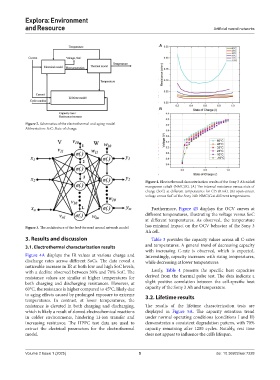
                                                               Figure 4. Electrothermal characterization results of the Sony 3 Ah nickel
                                                               manganese cobalt (NMC)/G. (A) The internal resistance versus state of
                                                               charge (SoC) at different temperatures for C/5 (0.6A). (B) open-circuit
                                                               voltage versus SoC of the Sony 3Ah NMC/G at different temperatures.


                                                                 Furthermore,  Figure  4B displays the OCV curves at
                                                               different temperatures, illustrating the voltage versus SoC
                                                               at different temperatures. As observed, the temperature
            Figure 3. The architecture of the feed-forward neural network model  has minimal impact on the OCV behavior of the Sony 3
                                                               Ah cell.
            3. Results and discussion                            Table 3 provides the capacity values across all C-rates

            3.1. Electrothermal characterization results       and temperatures. A general trend of decreasing capacity
                                                               with  increasing  C-rate  is  observed,  which  is  expected.
            Figure  4A displays  the IR  values at various charge  and   Interestingly, capacity increases with rising temperatures,
            discharge rates across different SoCs. The data reveal a   while decreasing at lower temperatures.
            noticeable increase in IR at both low and high SoC levels,
            with a decline observed between 30% and 70% SoC. The   Lastly,  Table  4  presents  the  specific  heat  capacities
            resistance values are similar at higher temperatures for   derived from the thermal pulse test. The data indicate a
            both charging and discharging resistances. However, at   slight positive correlation between the cell-specific heat
            60°C, the resistance is higher compared to 45°C, likely due   capacity of the Sony 3 Ah and temperature.
            to aging effects caused by prolonged exposure to extreme   3.2. Lifetime results
            temperatures. In contrast, at lower temperatures, the
            resistance is elevated in both charging and discharging,   The  results  of  the  lifetime  characterization  tests  are
            which is likely a result of slowed electrochemical reactions   displayed in  Figure  5A. The capacity retention trend
            in colder environments, hindering Li-ion transfer and   under normal operating conditions (conditions I and II)
            increasing resistance. The HPPC test data are used to   demonstrates a consistent degradation pattern, with 70%
            extract the electrical parameters for the electrothermal   capacity remaining after 1200  cycles. Notably, rest time
            model.                                             does not appear to influence the cell’s lifespan.


            Volume 2 Issue 1 (2025)                         5                                doi: 10.36922/eer.7228

