


Page 108 - EER-2-2
P. 108
Explora: Environment
            and Resource                                                             Climate suitability of AWD practice


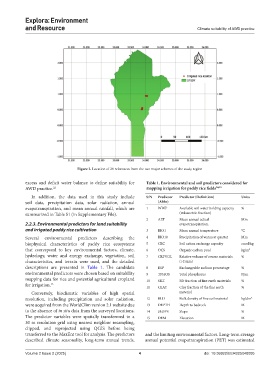
                                  Figure 2. Location of 29 references from the two major schemes of the study region


            excess and deficit water balance to define suitability for   Table 1. Environmental and soil predictors considered for
            AWD practice. 22                                   mapping irrigation for paddy rice fields 20,25

              In addition, the data used in this study include   S/N  Predictor   Predictor (Definition)  Units
            soil  data,  precipitation data,  solar  radiation,  annual   (Abbr)
            evapotranspiration, and mean annual rainfall, which are   1  WWP  Available soil water holding capacity   %
            summarized in Table S1 (in Supplementary File).                  (volumetric fraction)
                                                               2    AET      Mean annual actual         Mm
            2.2.3. Environmental predictors for land suitability             evapotranspiration.
            and irrigated paddy rice cultivation               3    BIO1     Mean annual temperature    °C
            Several  environmental  predictors  describing  the  4  BIO18    Precipitation of warmest quarter  Mm
            biophysical  characteristics  of  paddy  rice  ecosystems   5  CEC  Soil cation exchange capacity  cmol/kg
            that correspond to key environmental factors, climate,   6  OCS  Organic carbon pool        kg/m 2
            hydrology, water and energy exchange, vegetation, soil   7  CRFVOL  Relative volume of course materials   %
            characteristics, and terrain were  used, and the detailed        (>2 mm)
            descriptions are presented in  Table 1. The candidate   8  ESP   Exchangeable sodium percentage  %
            environmental predictors were chosen based on suitability   9  TPHOS  Total phosphorus      Ppm
            mapping data for rice and potential agricultural cropland   10  SILT  Silt fraction of fine earth materials  %
            for irrigation. 23                                 11   CLAY     Clay fraction of the fine earth   %
              Conversely,  bioclimatic  variables  of  high  spatial         material
            resolution, including precipitation and solar radiation,   12  BLD  Bulk density of fine soil material  kg/dm   2
            were acquired from the WorldClim version 2.1 website due   13  DEPTH  Depth to bedrock      M
            to the absence of in situ data from the surveyed locations.   14  SLOPE  Slope              %
            The  predictor  variables  were  spatially  transformed  to  a   15  DEM  Elevation         M
            30 m resolution grid using nearest neighbor resampling,
            clipped, and reprojected using QGIS before being
            transferred to the MaxEnt tool for analysis. The predictors   and the limiting environmental factors. Long-term average
            described climate seasonality, long-term annual trends,   annual potential evapotranspiration (PET) was estimated

            Volume 2 Issue 2 (2025)                         4                           doi: 10.36922/EER025040005

