


Page 102 - EER-2-3
P. 102
Explora: Environment
            and Resource                                    Comparative analysis of THMs and THAAs in water distribution media


                         A                                  B


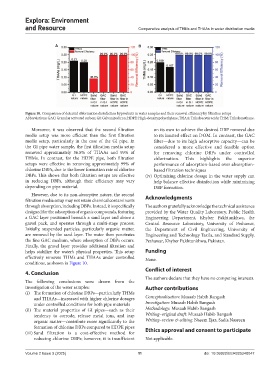
            Figure 10. Comparison of detected chlorination disinfection byproducts in water samples and their removal efficiency by filtration setups
            Abbreviations: GAC: Granular activated carbon; GI: Galvanized iron; HDPE: High-density polyethylene; THAA: Trihaloacetic acids; THM: Trihalomethane.

              Moreover, it was observed that the second filtration   on its own to achieve the desired DBP removal due
            media setup was more efficient than the first filtration   to its limited effect on DOM. In contrast, the GAC
            media setup, particularly in the case of the GI pipe. In   filter—due to its high adsorptive capacity—can be
            the GI pipe water sample, the first filtration media setup   considered a more effective and feasible option
            removed approximately 36.8% of THAAs and 99% of       for  removing  chlorine  DBPs  under  controlled
            THMs. In contrast, for the HDPE pipe, both filtration   chlorination.  This  highlights  the  superior
            setups were effective in removing approximately 99% of   performance of adsorption-based over absorption-
            chlorine DBPs, due to the lower formation rate of chlorine   based filtration techniques
            DBPs. This shows that both filtration setups are effective   (iv)  Optimizing chlorine dosage in the water supply can
            in  reducing  DBPs,  although  their  efficiency  may  vary   help balance effective disinfection while minimizing
            depending on pipe material.                           DBP formation.
              However, due to its non-absorptive nature, the second
            filtration media setup may not retain chemical contaminants   Acknowledgments
            through absorption, including DBPs. Instead, it is specifically   The authors gratefully acknowledge the technical assistance
            designed for the adsorption of organic compounds, featuring   provided by the Water Quality Laboratory, Public Health
            a GAC layer positioned beneath a sand layer and above a   Engineering Department, Khyber Pakhtunkhwa, the
            gravel pack, and operates through a multi-stage process.   Central Resource Laboratory, University of Peshawar,
            Initially,  suspended  particles,  particularly  organic  matter,   the Department of Civil Engineering, University of
            are removed by the sand layer. The water then penetrates   Engineering and Technology Taxila, and Standard Supply,
            the fine GAC medium, where adsorption of DBPs occurs.   Peshawar, Khyber Pakhtunkhwa, Pakistan.
            Finally, the gravel layer provides additional filtration and
            helps stabilize the water’s physical properties. This setup   Funding
            effectively removes THMs and THAAs under controlled   None.
            conditions, as shown in Figure 10.
                                                               Conflict of interest
            4. Conclusion
                                                               The authors declare that they have no competing interests.
            The following conclusions were drawn from the
            investigation of the water samples:                Author contributions
            (i)  The formation of chlorine DBPs—particularly THMs
               and THAAs—increased with higher chlorine dosages   Conceptualization: Musaab Habib Bangash
               under controlled conditions for both pipe materials  Investigation: Musaab Habib Bangash
            (ii)  The material properties of GI pipes—such as their   Methodology: Musaab Habib Bangash
               tendency to corrode, release metal ions, and trap   Writing–original draft: Musaab Habib Bangash
               organic matter—contribute more significantly to the   Writing–review & editing: Naeem Ejaz, Sadia Nasreen
               formation of chlorine DBPs compared to HDPE pipes
            (iii) Sand filtration is a cost-effective method for   Ethics approval and consent to participate
               reducing chlorine DBPs; however, it is insufficient   Not applicable.


            Volume 2 Issue 3 (2025)                         11                          doi: 10.36922/EER025240047

