


Page 212 - EJMO-9-2
P. 212
Eurasian Journal of
            Medicine and Oncology                                             Tetramethyl thyroxine boosts bladder cancer


                         A


                         B


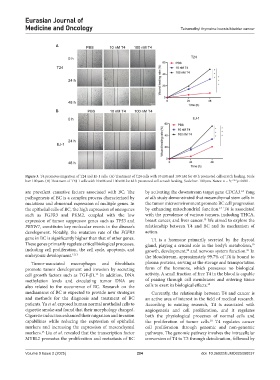
            Figure 3. T4 promotes migration of T24 and EJ-1 cells. (A) Treatment of T24 cells with 10 nM and 100 nM for 48 h promoted cell scratch healing. Scale
            bar: 100 μm. (B) Treatment of TEJ-1 cells with 10 nM and 100 nM for 48 h promoted cell scratch healing. Scale bar: 100 μm. Notes: n = 3; ***p<0.001.

            are prevalent causative factors associated with BC. The   by activating the downstream target gene CDCA3.  Yang
                                                                                                        16
            pathogenesis of BC is a complex process characterized by   et al.’s study demonstrated that mesenchymal stem cells in
            mutations and abnormal expression of multiple genes. In   the tumor microenvironment promote BC cell progression
            the epithelial cells of BC, the high expression of oncogenes   by enhancing mitochondrial function.  T4 is associated
                                                                                              17
            such as FGFR3 and PKM2, coupled with the low       with the prevalence of various tumors, including THCA,
                                                                                        18
            expression of tumor suppressor genes such as TP53 and   breast cancer, and liver cancer.  We aimed to explore the
            FBXW7, constitutes key molecular events in the disease’s   relationship between T4 and BC and its mechanism of
            development. Notably, the mutation rate of the  FGFR3   action.
            gene in BC is significantly higher than that of other genes.   T4 is a hormone primarily secreted by the thyroid
            These genes primarily regulate critical biological processes,   gland, playing a crucial role in the body’s metabolism,
                                                                                                            19
            including cell proliferation, the cell cycle, apoptosis, and   growth, development,  and nervous system function.  In
                                                                                20
                                                                                                          21
            embryonic development. 12,13                       the bloodstream, approximately 99.7% of T4 is bound to
              Tumor-associated  macrophages  and  fibroblasts  plasma proteins, serving as the storage and transportation
            promote tumor development and invasion by secreting   form of the hormone, which possesses no biological
            cell  growth  factors  such  as  TGF-β1.   In  addition,  DNA   activity. A small fraction of free T4 in the blood is capable
                                          14
            methylation levels and circulating tumor DNA are   of passing through cell membranes and entering tissue
            also related to the occurrence of BC. Research on the   cells to exert its biological effects. 22
            mechanisms of BC is expected to provide new strategies   Currently, the relationship between T4 and cancer is
            and methods for the diagnosis and treatment of BC   an active area of interest in the field of medical research.
            patients. Yu et al. exposed human normal urothelial cells to   According to existing research, T4 is associated with
            cigarette smoke and found that their morphology changed.   angiogenesis and cell proliferation, and it regulates
            Cigarette induction enhanced their migration and invasion   both the physiological processes of normal cells and
            capabilities while reducing the expression of epithelial   the proliferation of tumor cells.  T4 regulates cancer
                                                                                          18
            markers and increasing the expression of mesenchymal   cell proliferation through genomic and non-genomic
                   15
            markers.  Liu et al. revealed that the transcription factor   pathways. The genomic pathway involves the intracellular
            MYBL2 promotes the proliferation and metastasis of BC   conversion of T4 to T3 through deiodination, followed by

            Volume 9 Issue 2 (2025)                        204                         doi: 10.36922/EJMO025080037

