


Page 281 - EJMO-9-2
P. 281
Eurasian Journal of
            Medicine and Oncology                                          QGJSF multi-target mechanisms in osteoporosis


            OP-related disease targets, a total of 500 mapped targets
            were identified, as shown in Figure 1.
            3.3. Construction and analysis of the PPI network

            A target PPI network was constructed using the STRING
            database with the association score (combined_score)
            threshold set at 0.9, and isolated nodes were excluded.
            In this network, nodes represent target proteins, while
            edges indicate associations between them. As shown in
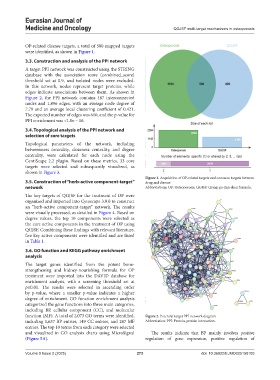
            Figure  2, the PPI network contains 487 interconnected
            nodes and 1,896 edges, with an average node degree of
            7.79 and an average local clustering coefficient of 0.421.
            The expected number of edges was 610, and the p-value for
            PPI enrichment was <1.0e – 16.

            3.4. Topological analysis of the PPI network and
            selection of core targets
            Topological parameters of the network, including
            betweenness centrality, closeness centrality, and degree
            centrality, were calculated for each node using the
            CentiScape 2.2 plugin. Based on these metrics, 33 core
            targets were selected and subsequently visualized, as
            shown in Figure 3.
                                                               Figure 1. Acquisition of OP-related targets and common targets between
            3.5. Construction of “herb-active component-target”   drug and disease
            network                                            Abbreviations: OP: Osteoporosis; QGJSF: Qiang-gu-jian-shen formula.
            The key targets of QGJSF for the treatment of OP were
            organized and imported into Cytoscape 3.9.0 to construct
            an “herb-active component-target” network. The results
            were visually processed, as detailed in Figure 4. Based on
            degree values, the top 10 components were selected as
            the core active components in the treatment of OP using
            QGJSF. Combining these findings with relevant literature,
            five key active components were identified and are listed
            in Table 1.

            3.6. GO function and KEGG pathway enrichment
            analysis
            The target genes identified from the potent bone-
            strengthening and kidney-nourishing formula for OP
            treatment were imported into the DAVID database for
            enrichment analysis, with a screening threshold set at
            p≤0.01. The results were selected in ascending order
            by  p-value, where a smaller  p-value indicates a higher
            degree of enrichment. GO function enrichment analysis
            categorized the gene functions into three main categories,
            including BP, cellular component (CC), and molecular
            function (MF). A total of 2,073 GO terms were identified,   Figure 2. Potential target PPI network diagram
            including 1,637 BP entries, 149 CC entries, and 287 MF   Abbreviation: PPI: Protein-protein interaction.
            entries. The top 10 terms from each category were selected
            and visualized in GO analysis  charts using MicroSignal   The  results  indicate  that  BP  mainly  involves  positive
            (Figure 5A).                                       regulation of gene expression, positive regulation of


            Volume 9 Issue 2 (2025)                        273                         doi: 10.36922/EJMO025150103

