


Page 183 - EJMO-9-3
P. 183
Eurasian Journal of
            Medicine and Oncology                                                  Research on DSY in treating gastritis


                         A                                   B


                                                             D
                         C


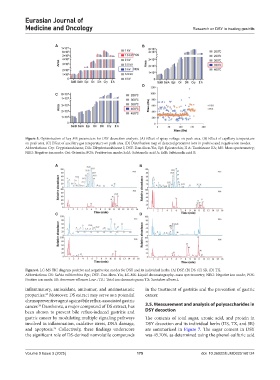
            Figure 5. Optimization of key MS parameters for DSY decoction analysis. (A) Effect of spray voltage on peak area. (B) Effect of capillary temperature
            on peak area. (C) Effect of auxiliary gas temperature on peak area. (D) Distribution map of detected precursor ions in positive and negative ion modes.
            Abbreviations: Cry: Cryptotanshinone; Dih: Dihydrotanshinone I; DSY: Dan-Shen-Yin; Epi: Epicatechin; II A: Tanshinone IIA; MS: Mass spectrometry;
            NEG: Negative ion mode; Ori: Orientin; POS: Positive ion mode; SalA: Salvianolic acid A; SalB: Salvianolic acid B.

                         A                                  B


                         C                                  D


            Figure 6. LC-MS TIC diagram positive and negative ion modes for DSY and its individual herbs. (A) DSY. (B) DS. (C) SR. (D) TX.
            Abbreviations: DS: Salvia miltiorrhiza Bge.; DSY: Dan-Shen-Yin; LC-MS: Liquid chromatography–mass spectrometry; NEG: Negative ion mode; POS:
            Positive ion mode; SR: Amomum villosum Lour.; TIC: Total ion chromatogram; TX: Santalum album L.
            inflammatory, antioxidant, antitumor, and antimetastatic   in the treatment of gastritis and the prevention of gastric
            properties.  Moreover, DS extract may serve as a potential   cancer.
                    25
            chemopreventive agent against bile reflux-associated gastric
            cancer.  Danshensu, a major compound of DS extract, has   3.5. Measurement and analysis of polysaccharides in
                 26
            been shown to prevent bile reflux-induced gastritis and   DSY decoction
            gastric cancer by modulating multiple signaling pathways   The contents of total sugar, uronic acid, and protein in
            involved in inflammation, oxidative stress, DNA damage,   DSY decoction and its individual herbs (DS, TX, and SR)
            and  apoptosis.   Collectively, these  findings  underscore   are summarized in  Figure  7. The sugar content in DSY
                        25
            the significant role of DS-derived nonvolatile compounds   was 45.70%, as determined using the phenol-sulfuric acid


            Volume 9 Issue 3 (2025)                        175                         doi: 10.36922/EJMO025160124

