


Page 224 - EJMO-9-3
P. 224
Eurasian Journal of
            Medicine and Oncology                                              FN3K–Nrf2 axis inhibition in breast cancer


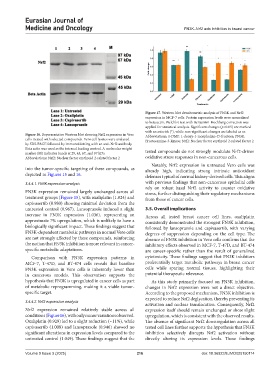
                                                               Figure 17. Western blot densitometric analysis of FN3K and Nrf2
                                                               expression in MCF-7 cells. Protein expression levels were normalized
                                                               to beta actin. Welch’s t-test with Benjamini-Hochberg correction was
                                                               applied for statistical analysis. Significant changes (p<0.05) are marked
                                                               with an asterisk (*), while non-significant changes are labeled as ns
            Figure 16. Representative Western blot showing Nrf2 expression in Vero   Abbreviations: 1-DMF: 1-deoxy-1-morpholino-D-fructose; FN3K:
            cells treated with selected compounds. Vero cell lysates were analyzed   Fructosamine-3-kinase; Nrf2: Nuclear factor erythroid 2-related factor 2
            by SDS-PAGE followed by immunoblotting with an anti-Nrf2 antibody.
            Beta actin was used as the internal loading control. A molecular weight
            marker (M) indicates bands at 29, 45, 67, and 97 kDa   tested compounds do not strongly modulate Nrf2-driven
            Abbreviations: Nrf2: Nuclear factor erythroid 2-related factor 2  oxidative stress responses in non-cancerous cells.
                                                                 Notably, Nrf2 expression in untreated Vero cells was
            into the tumor-specific targeting of these compounds, as   already high, indicating strong intrinsic antioxidant
            depicted in Figures 15 and 16.                     defenses typical of normal kidney-derived cells. This aligns
            3.4.4.1. FN3K expression analysis                  with previous findings that non-cancerous epithelial cells
                                                               rely on robust basal Nrf2 activity to counter oxidative
            FN3K expression remained largely unchanged across all   stress, further distinguishing their regulatory mechanisms
            treatment groups (Figure 15), with oxaliplatin (1.024) and   from those of cancer cells.
            capivasertib (0.980) showing minimal deviation from the
            untreated control (0.967). Lansoprazole induced a slight   3.5. Overall implications
            increase in FN3K expression (1.036), representing an   Across all tested breast cancer cell lines, oxaliplatin
            approximate 7% upregulation, which is unlikely to have a   consistently demonstrated the strongest FN3K inhibition,
            biologically significant impact. These findings suggest that   followed  by lansoprazole and  capivasertib, with varying
            FN3K-dependent metabolic pathways in normal Vero cells   degrees of suppression depending on the cell type. The
            are not strongly affected by these compounds, reinforcing   absence of FN3K inhibition in Vero cells confirms that the
            the notion that FN3K inhibition is more relevant in cancer-  inhibitory effects observed in MCF-7, T-47D, and BT-474
            specific metabolic adaptations.                    are cancer-specific rather than the result of generalized
              Comparison  with  FN3K  expression  patterns  in   cytotoxicity. These findings suggest that FN3K inhibitors
            MCF-7, T-47D, and BT-474  cells reveals that baseline   preferentially target metabolic pathways in breast cancer
            FN3K expression in Vero cells is inherently lower than   cells  while  sparing  normal tissues,  highlighting  their
            in cancerous models. This observation supports the   potential therapeutic relevance.
            hypothesis that FN3K is upregulated in cancer cells as part   As this study primarily focused on FN3K inhibition,
            of metabolic reprogramming, making it a viable tumor-  changes in Nrf2 expression were not a direct objective.
            specific target.                                   According to the proposed mechanism, FN3K inhibition is
                                                               expected to reduce Nrf2 deglycation, thereby preventing its
            3.4.4.2. Nrf2 expression analysis
                                                               activation and nuclear translocation. Consequently, Nrf2
            Nrf2 expression remained relatively stable across all   expression itself should remain unchanged or show slight
            conditions (Figure 16), with only minor variations observed.   upregulation, which is consistent with the observed results.
            Oxaliplatin (0.929) led to a slight reduction (~11%), while   The absence of significant Nrf2 downregulation across all
            capivasertib (1.008) and lansoprazole (0.946) showed no   tested cell lines further supports the hypothesis that FN3K
            significant alterations in expression levels compared to the   inhibition  selectively  disrupts  Nrf2  activation  without
            untreated control (1.049). These findings suggest that the   directly altering its expression levels. These findings


            Volume 9 Issue 3 (2025)                        216                         doi: 10.36922/EJMO025150114

