


Page 222 - EJMO-9-3
P. 222
Eurasian Journal of
            Medicine and Oncology                                              FN3K–Nrf2 axis inhibition in breast cancer


                                                               compared to the untreated control (Figure  11). This
                                                               suggests that  oxaliplatin may  act  as  a strong FN3K
                                                               inhibitor in T-47D cells, potentially influencing
                                                               metabolic regulation. In contrast, capivasertib (0.979)
                                                               and lansoprazole (0.876) induced only minimal
                                                               reductions in FN3K expression, with lansoprazole
                                                               showing a modest ~10% decrease, while capivasertib
                                                               had a negligible effect. These findings indicate
                                                               that while these compounds may modulate FN3K
                                                               expression, their impact is less pronounced than that
                                                               observed with oxaliplatin. The untreated control
                                                               (0.967) served as a baseline reference for comparison.
                                                               3.4.2.2. Nrf2 expression analysis
                                                               Nrf2 expression remained largely unaffected across all
                                                               treatment groups, with oxaliplatin (0.909), capivasertib
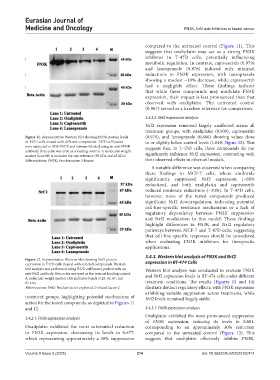
            Figure 11. Representative Western blot showing FN3K protein levels   (0.979), and lansoprazole (0.886) showing values close
            in T47D cells treated with different compounds. T47D cell lysates   to or slightly below control levels (1.049; Figure 12). This
            were subjected to SDS-PAGE and immunoblotted using an anti-FN3K   suggests that, in T-47D cells, these compounds do not
            antibody. Beta actin was used as a loading control. A molecular weight   significantly influence Nrf2 expression, contrasting with
            marker (lane M) is included for size reference (29 kDa and 45 kDa)
            Abbreviations: FN3K: Fructosamine-3-kinase         their observed effects in other cell models.
                                                                 A notable difference was observed when comparing
                                                               these findings to MCF-7  cells, where amiloride
                                                               significantly suppressed Nrf2 expression (~60%
                                                               reduction),  and  both  oxaliplatin  and  capivasertib
                                                               induced moderate reductions (~20%). In T-47D cells,
                                                               however, none  of the  tested  compounds produced
                                                               significant Nrf2 downregulation, indicating potential
                                                               cell-line-specific resistance mechanisms or a lack of
                                                               regulatory dependency between FN3K suppression
                                                               and Nrf2 modulation in this model. These findings
                                                               highlight differences in FN3K and Nrf2 regulatory
                                                               pathways between MCF-7 and T-47D cells, suggesting
                                                               that  cell-line-specific  responses  should  be  considered
                                                               when evaluating FN3K inhibitors for therapeutic
                                                               applications.
                                                               3.4.3. Western blot analysis of FN3K and Nrf2
            Figure 12. Representative Western blot showing Nrf2 protein
            expression in T47D cells treated with selected compounds. Western   expression in BT-474 Cells
            blot analysis was performed using T47D cell lysates probed with an   Western blot analysis was conducted to evaluate FN3K
            anti-Nrf2 antibody. Beta actin was used as the internal loading control.   and Nrf2 expression levels in BT-474 cells under different
            A molecular weight marker (M) indicates bands at 29, 45, 67, and
            97 kDa                                             treatment conditions. The results (Figures  13 and  14)
            Abbreviations: Nrf2: Nuclear factor erythroid 2-related factor 2  illustrate distinct regulatory effects, with FN3K expression
                                                               exhibiting variable suppression across treatments, while
            treatment  groups,  highlighting  potential  mechanisms  of   Nrf2 levels remained largely stable.
            action for the tested compounds, as depicted in Figures 11
            and 12.                                            3.4.3.1. FN3K expression analysis
                                                               Oxaliplatin exhibited the most pronounced suppression
            3.4.2.1. FN3K expression analysis
                                                               of FN3K expression, reducing its levels to 0.681,
            Oxaliplatin exhibited the most substantial reduction   corresponding to an approximately 30% reduction
            in FN3K expression, decreasing its levels to 0.677,   compared to the untreated control (Figure  13). This
            which representing approximately a 30% suppression   suggests that oxaliplatin effectively inhibits FN3K,


            Volume 9 Issue 3 (2025)                        214                         doi: 10.36922/EJMO025150114

