


Page 279 - EJMO-9-3
P. 279
Eurasian Journal of
            Medicine and Oncology                                         WGCNA and LASSO for osteoporosis biomarkers


            A                               B                               C


                         D                                 E


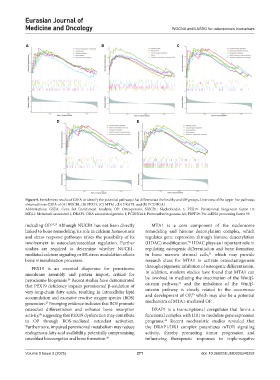
            Figure 9. Enrichment results of GSEA to identify the potential pathways that differentiate the healthy and OP groups. Overview of the upper five pathways
            obtained from GSEA of (A) NUCB1, (B) PEX19, (C) MTA1, (D) DRAP1, and (E) PCDHGA1.
            Abbreviations: GSEA: Gene Set Enrichment Analysis; OP: Osteoporosis; NUCB1: Nucleobindin 1; PEX19: Peroxisomal biogenesis factor 19;
            MTA1: Metastasis associated 1; DRAP1: DRA aassociated protein 1; PCDHGA1: Protocadherin gamma A1; PRPF39: Pre-mRNA processing factor 39.

            including OP. 24,25  Although NUCB1 has not been directly   MTA1 is a core component of the nucleosome
            linked to bone remodeling, its role in calcium homeostasis   remodeling and histone deacetylation complex, which
            and stress response pathways raises the possibility of its   regulates  gene  expression  through  histone  deacetylation
            involvement in osteoclast/osteoblast regulation. Further   (HDAC) modification.  HDAC plays an important role in
                                                                                 30
            studies are required to determine whether NUCB1-   regulating osteogenic differentiation and bone formation
            mediated calcium signaling or ER stress modulation affects   in bone marrow stromal cells,  which may provide
                                                                                          31
            bone mineralization processes.                     research clues for MTA1 to activate osteoclastogenesis
              PEX19  is an  essential chaperone  for peroxisome   through epigenetic inhibition of osteogenic differentiation.
            membrane assembly and protein import, critical for   In addition, modern studies have found that MTA1 can
            peroxisome biogenesis.  Recent studies have demonstrated   be involved in mediating the inactivation of the Wnt/β-
                              26
                                                                             32
            that PEX19 deficiency impairs peroxisomal β-oxidation of   catenin pathway,  and the imbalance of the Wnt/β-
            very-long-chain fatty acids, resulting in intracellular lipid   catenin pathway is closely related to the occurrence
                                                                                   33
            accumulation and excessive reactive oxygen species (ROS)   and development of OP,  which may also be a potential
                    27
            generation.  Emerging evidence indicates that ROS promote   mechanism of MTA1-mediated OP.
            osteoclast differentiation and enhance bone resorption   DRAP1 is a transcriptional coregulator that forms a
            activity,  suggesting that PEX19 dysfunction may contribute   functional complex with DR1 to modulate gene expression
                  28
            to  OP  through  ROS-mediated  osteoclast  activation.   programs.   Recent  mechanistic  studies  revealed  that
                                                                       34
            Furthermore, impaired peroxisomal metabolism may reduce   the DRAP1/DR1 complex potentiates mTOR signaling
            endogenous fatty acid availability, potentially compromising   activity, thereby promoting tumor progression and
            osteoblast bioenergetics and bone formation. 29    influencing therapeutic responses in  triple-negative

            Volume 9 Issue 3 (2025)                        271                         doi: 10.36922/EJMO025240252

