


Page 276 - EJMO-9-3
P. 276
Eurasian Journal of
            Medicine and Oncology                                         WGCNA and LASSO for osteoporosis biomarkers


            A                                             B


            C                                           D


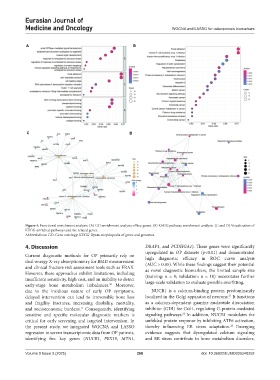
            Figure 4. Functional enrichment analysis. (A) GO enrichment analysis of key genes. (B) KEGG pathway enrichment analysis. (C and D) Visualization of
            KEGG-enriched pathways and the related genes.
            Abbreviations: GO: Gene ontology; KEGG: Kyoto encyclopedia of genes and genomes.

            4. Discussion                                      DRAP1, and PCDHGA1). These genes were significantly
                                                               upregulated in OP datasets (p<0.01) and demonstrated
            Current diagnostic methods for OP primarily rely on   high diagnostic efficacy in ROC curve analysis
            dual-energy X-ray absorptiometry for BMD measurement   (AUC > 0.85). While these findings suggest their potential
            and clinical fracture risk assessment tools such as FRAX.   as  novel  diagnostic  biomarkers,  the  limited  sample  size
            However, these approaches exhibit limitations, including
            insufficient sensitivity, high cost, and an inability to detect   (training:  n = 9; validation: n = 10) necessitates further
                                                               large-scale validation to evaluate possible overfitting.
            early-stage bone metabolism imbalances.  Moreover,
                                                20
            due to the insidious nature of early OP symptoms,    NUCB1 is a calcium-binding protein predominantly
            delayed  intervention  can  lead  to  irreversible  bone  loss   localized in the Golgi apparatus of neurons.  It functions
                                                                                                  21
            and fragility fractures, increasing disability, mortality,   as a calcium-dependent guanine nucleotide dissociation
            and socioeconomic burdens.  Consequently, identifying   inhibitor (GDI) for Gαi1, regulating G-protein-mediated
                                   11
            sensitive  and specific molecular  diagnostic markers  is   signaling pathways.  In addition, NUCB1 modulates the
                                                                               22
            critical for early screening and targeted intervention. In   unfolded protein response by inhibiting ATF6 activation,
                                                                                                   23
            the  present  study,  we  integrated  WGCNA  and  LASSO   thereby influencing ER stress adaptation.  Emerging
            regression to screen transcriptomic data from OP patients,   evidence suggests that dysregulated calcium signaling
            identifying five key genes (NUCB1,  PEX19,  MTA1,   and ER stress contribute to bone metabolism disorders,


            Volume 9 Issue 3 (2025)                        268                         doi: 10.36922/EJMO025240252

