


Page 102 - ESAM-1-1
P. 102
Engineering Science in
            Additive Manufacturing                                               Mechanical property of metal-based IPC


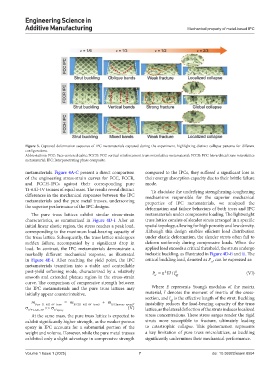
            Figure 3. Captured deformation sequence of IPC metamaterials captured during the experiment, highlighting distinct collapse patterns for different
            configurations.
            Abbreviations: FCC: Face-centered cubic; FCCH: FCC vertical reinforcement truss microlattice metamaterial; FCCR: FCC hierarchical truss microlattice
            metamaterial; IPC: Interpenetrating phase composite.

            metamaterials. Figure 4A-C present a direct comparison   compared to the IPCs, they suffered a significant loss in
            of the engineering stress-strain curves for FCC, FCCR,   their energy absorption capacity due to their brittle failure
            and  FCCH-IPCs  against  their  corresponding  pure   mode.
            Ti-6Al-4V trusses of equal mass. The results reveal distinct   To elucidate the underlying strengthening-toughening
            differences in the mechanical responses between the IPC   mechanisms responsible for the superior mechanical
            metamaterials and the pure metal trusses, underscoring   properties of IPC metamaterials, we analyzed the
            the superior performance of the IPC designs.       deformation and failure behaviors of both truss and IPC
              The pure  truss  lattices  exhibit  similar  stress-strain   metamaterials under compressive loading. The lightweight
            characteristics, as summarized in  Figure  4D-i. After an   truss lattice consists of slender struts arranged in a specific
            initial linear elastic region, the stress reaches a peak load,   spatial topology, allowing for high porosity and low density.
            corresponding to the maximum load-bearing capacity of   Although this design enables efficient load distribution
            the truss lattice. Subsequently, the truss lattice undergoes   under elastic deformation, the slender struts often fail to
            sudden failure, accompanied by a significant drop in   deform uniformly during compressive loads. When the
            load. In contrast, the IPC metamaterials demonstrate a   applied load exceeds a critical threshold, the struts undergo
            markedly  different  mechanical  response,  as  illustrated   inelastic buckling, as illustrated in Figure 4D-ii and iii. The
            in  Figure  4E-i. After reaching the yield point, the IPC   critical buckling load, denoted as P , can be expressed as:
                                                                                           cr
            metamaterials transition into a stable and controllable
            post-yield softening mode, characterized  by a  relatively   P  2 EIl/  2                   (VI)
            smooth and extended plateau region in the stress-strain   cr    eff
            curve. The comparison of compressive strength between
            the IPC metamaterials and the pure truss lattices may   Where  E represents Young’s modulus of the matrix
            initially appear counterintuitive,                 material,  I denotes the moment of inertia of the cross-
                                                               section, and l  is the effective length of the strut. Buckling
                                                                         eff
              m             =  m            +  m          ,    instability reduces the load-bearing capacity of the truss
                     >> σ ,
            σ ,  Pure Ti−6Al−4V truss  IPC(Ti−6Al−4V truss)  IPC(porous epoxy)
                                                       (V)
             C Ti−6Al−4V  C epoxy                              lattice, as the lateral deflection of the struts induces localized
              At the same mass, the pure truss lattice is expected to   stress concentrations. These stress surges render the rigid
            exhibit significantly higher strength, as the weaker porous   struts more susceptible to fracture, ultimately leading
            epoxy in IPC accounts for a substantial portion of the   to catastrophic collapse. This phenomenon represents
            weight and volume. However, while the pure metal trusses   a key limitation of pure truss microlattices, as buckling
            exhibited only a slight advantage in compressive strength   significantly undermines their mechanical performance.


            Volume 1 Issue 1 (2025)                         7                              doi: 10.36922/esam.8554

