


Page 103 - ESAM-1-1
P. 103
Engineering Science in
            Additive Manufacturing                                               Mechanical property of metal-based IPC


                          A                       B                      C


                          D


                          E


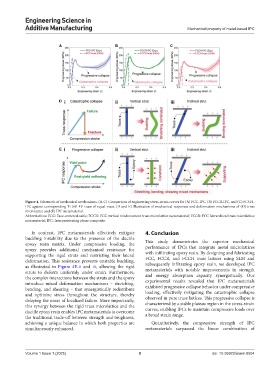
            Figure 4. Schematic of mechanical mechanisms. (A-C) Comparison of engineering stress-strain curves for (A) FCC-IPC, (B) FCCR-IPC, and (C) FCCH-
            IPC against corresponding Ti-6Al-4V truss of equal mass. (D and E) Illustration of mechanical responses and deformation mechanisms of (D) truss
            microlattice and (E) IPC metamaterial.
            Abbreviations: FCC: Face-centered cubic; FCCH: FCC vertical reinforcement truss microlattice metamaterial; FCCR: FCC hierarchical truss microlattice
            metamaterial; IPC: Interpenetrating phase composite.

              In contrast, IPC metamaterials effectively mitigate   4. Conclusion
            buckling instability due to the presence of the ductile
            epoxy resin matrix. Under compressive loading, the   This study demonstrates the superior mechanical
            epoxy provides additional mechanical resistance for   performance of IPCs that integrate metal microlattices
            supporting the rigid struts and restricting their lateral   with infiltrating epoxy resin. By designing and fabricating
            deformation. This resistance prevents unstable buckling,   FCC, FCCR, and FCCH truss lattices using SLM and
            as illustrated in  Figure  4E-ii and  iii, allowing the rigid   subsequently infiltrating epoxy resin, we developed IPC
            struts to deform uniformly under strain. Furthermore,   metamaterials with notable improvements in strength
            the complex interactions between the struts and the epoxy   and energy absorption capacity synergistically. Our
            introduce mixed deformation mechanisms – stretching,   experimental  results  revealed  that  IPC  metamaterials
            bending, and shearing – that synergistically redistribute   exhibited progressive collapse behavior under compressive
            and optimize stress throughout the structure, thereby   loading, effectively mitigating the catastrophic collapse
            delaying the onset of localized failure. More importantly,   observed in pure truss lattices. This progressive collapse is
            this synergy between the rigid truss microlattice and the   characterized by a stable plateau region in the stress-strain
            ductile epoxy resin enables IPC metamaterials to overcome   curves, enabling IPCs to maintain compressive loads over
            the traditional trade-off between strength and toughness,   a broad strain range.
            achieving a unique balance in which both properties are   Quantitatively,  the  compressive  strength  of  IPC
            simultaneously enhanced.                           metamaterials surpassed the linear combination of


            Volume 1 Issue 1 (2025)                         8                              doi: 10.36922/esam.8554

