


Page 59 - ESAM-1-4
P. 59
Engineering Science in
            Additive Manufacturing                                                Reusability of Ti6Al4V powder in LPBF


            A                      B                           Conflict of interest
                                                               The authors declare that they have no competing interests.
                                                               Author contributions

                                                               Conceptualization: Amit Bandyopadhyay
                                                               Formal analysis: Nathaniel W. Zuckschwerdt
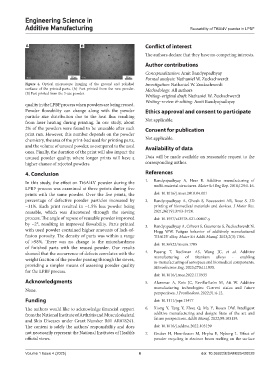
            Figure  4.  Optical microscope imaging of the ground and polished   Investigation: Nathaniel W. Zuckschwerdt
            surfaces of the printed parts. (A) Part printed from the new powder.   Methodology: All authors
            (B) Part printed from the 3-use powder.
                                                               Writing–original draft: Nathaniel W. Zuckschwerdt
                                                               Writing–review & editing: Amit Bandyopadhyay
            quality in the LPBF process when powders are being reused.
            Powder flowability can change along with the powder   Ethics approval and consent to participate
            particle size distribution due to the heat flux resulting
            from laser heating during printing. In our study, about   Not applicable.
            2% of the powders were found to be unusable after each   Consent for publication
            print run. However, this number depends on the powder
            chemistry, the area of the print-bed used for printing parts,   Not applicable.
            and the volume of unused powder, as compared to the used   Availability of data
            ones. Finally, the duration of the print will also impact the
            unused powder quality, where longer prints will have a   Data will be made available on reasonable request to the
            higher chance of rejected powders.                 corresponding author.
            4. Conclusion                                      References

            In this study, the effect on Ti6Al4V powder during the   1.   Bandyopadhyay A, Heer B. Additive manufacturing of
            LPBF process was examined at three points during five   multi-material structures. Mater Sci Eng Rep. 2018;129:1-16.
            prints with the same powder. Over the five prints, the      doi: 10.1016/j.mser.2018.04.001
            percentage of defective powder particles increased by   2.   Bandyopadhyay A, Ghosh S, Boccaccini AR, Bose S. 3D
            ~11%. Each print resulted in ~1.5% less powder being   printing of biomedical materials and devices. J Mater Res.
            reusable, which was discovered through the sieving    2021;36(19):3713-3724.
            process. The angle of repose of reusable powder improved      doi: 10.1557/s43578-021-00407-y
            by ~2°, resulting in improved flowability. Parts printed   3.   Bandyopadhyay A, Ciliveri S, Guariento S, Zuckschwerdt N,
            with used powder contained higher amounts of lack-of-  Hogg WW. Fatigue behavior of additively manufactured
            fusion porosity. The density of parts was within a range   Ti3Al2V alloy. Mater Sci Addit Manuf. 2023;2(3):1705.
            of  >98%.  There was  no  change to  the  microhardness      doi: 10.36922/msam.1705
            of finished parts with the reused powder. Our results
            showed that the occurrence of defects correlates with the   4.   Pasang T, Budiman AS, Wang JC,  et al. Additive
            weight fraction of the powder passing through the sieves,   manufacturing  of  titanium  alloys   -   enabling
                                                                  re-manufacturing of aerospace and biomedical components.
            providing a simpler means of assessing powder quality   Microelectron Eng. 2023;270:111935.
            for the LPBF process.
                                                                  doi: 10.1016/j.mee.2022.111935
            Acknowledgments                                    5.   Alammar A, Kois JC, Revilla-León M, Att W. Additive
                                                                  manufacturing technologies: Current status and future
            None.
                                                                  perspectives. J Prosthodont. 2022;31:4-12.
            Funding                                               doi: 10.1111/jopr.13477
            The authors would like to acknowledge financial support   6.   Xiong Y, Tang Y, Zhou Q, Ma Y, Rosen DW. Intelligent
            from the National Institute of Arthritis and Musculoskeletal   additive manufacturing and design: State of the art and
            and Skin Diseases under Grant Number R01 AR078241.    future perspectives. Addit Manuf. 2022;59:103139.
            The content is solely the authors’ responsibility and does      doi: 10.1016/j.addma.2022.103139
            not necessarily represent the National Institutes of Health’s   7.   Gruber H, Henriksson M, Hryha E, Nyborg L. Effect of
            official views.                                       powder recycling in electron beam melting on the surface


            Volume 1 Issue 4 (2025)                         6                          doi: 10.36922/ESAM025420028

