


Page 64 - ESAM-1-4
P. 64
Engineering Science in
            Additive Manufacturing                                             EST manipulates structure of Ti-6Al-4V/Cu


                         A                                         D


                                               C
                         B


                         E                                     F


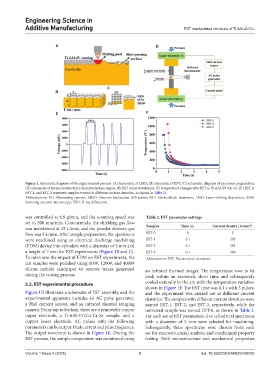
            Figure 1. Schematic diagram of the experimental process. (A) Schematic of LMD; (B) schematic of EST; (C) schematic diagram of specimen preparation;
            (D) schematic of the microstructural characterization region; (E) EST pulse waveforms; (F) temperature changes after EST in Ti-6Al-4V/Cu-Cr-Zr (EST-0,
            EST-1, and EST-2 represent samples treated at different current densities, as shown in Table 2).
            Abbreviations: AC: Alternating current; EBSD: Electron backscatter diffraction; EST: Electroshock treatment; LMD: Laser melting deposition; SEM:
            Scanning electron microscopy; XRD: X-ray diffraction.


            was controlled at 6.9 g/min, and the scanning speed was   Table 2. EST parameter settings
            set to 300 mm/min. Concurrently, the shielding gas flow                                        2
            was maintained at 25 L/min, and the powder delivery gas   Samples  Time (s)    Current density (A/mm )
            flow was 5 L/min. After sample preparation, the specimens   EST-0    0                  0
            were  machined  using an  electrical  discharge  machining   EST-1  0.1                205
            (EDM) device into cylinders with a diameter of 5 mm and   EST-2     0.1                262
            a height of 7 mm for EST experiments (Figure 1B and C).   EST-3     0.1                306
            To minimize the impact of EDM on EST experiments, the   Abbreviation: EST: Electroshock treatment.
            cut samples were polished using 600#, 1200#, and 4000#
            silicon carbide sandpaper to remove traces generated   an infrared thermal imager. The temperature rose to its
            during the cutting process.                        peak within an extremely short time and subsequently

            2.2. EST experimental procedure                    cooled naturally in the air, with the temperature variation
                                                               shown in Figure 1F. The EST time was 0.1 s with 5 pulses,
            Figure 1D illustrates a schematic of EST assembly, and the   and the experiment was carried out at different current
            experimental apparatus includes an AC pulse generator,   densities. The samples with different current densities were
            a  Hall  current  sensor,  and  an  infrared thermal  imaging   named EST-1, EST-2, and EST-3, respectively, while  the
            camera. From top to bottom, there are a removable copper   untreated sample was named EST-0, as shown in Table 2.
            upper electrode, a Ti-6Al-4V/Cu-Cr-Zr sample, and a   For each set of EST parameters, five cylindrical specimens
            copper lower electrode. AC pulses with the following   with a diameter of 5  mm were selected for machining.
            parameters can be output: Peak current and pulse frequency.   Subsequently, three specimens were chosen from each
            The output waveform is shown in Figure 1E. During the   set for microstructural analysis and mechanical property
            EST process, the sample temperature was monitored using   testing. Both microstructure and mechanical properties


            Volume 1 Issue 4 (2025)                         3                          doi: 10.36922/ESAM025430030

