


Page 87 - ESAM-1-4
P. 87
Engineering Science in
            Additive Manufacturing                                                TwinPrint: Dual-arm robotic bioprinting


            a multi-material printing process (Video S1; video   memory. Overall, the resolution was good enough for the
            description is given in the “Supplemental information”   application, as bioinks are of low viscosity and tend to
            section in this article).                          fill up gaps after deposition. Hence, the inaccuracy is less
              During printing, layer allocation and start point   visible as compared to the pen ink test.
            accuracy were observed. R1 was expected to print the   3.5. Formation of 3D multi-cellular disease model
            bottom layer and retreat to “home,” avoiding collision with
            R2 as it printed the next layer. This process was repeated   In  the  context  of  an  intact  organism,  cells  inhabit  a
            until layer 7. It was noted that R2 would shift slightly when   complex 3D environment, wherein cell-cell interaction
                                                                                                            39
            returning to the desired start point in subsequent layers.   plays a pivotal role in tissue physiology and development.
            This  impacted  the  construct  fidelity  but  was  negligible   Furthermore, the development of biomimicry disease
            for small constructs. It is presumed that the inaccuracy   models necessitates the precise replication of diverse
            is due to mechanical constraints and the robot’s cache   cellular interactions, as this process is imperative in the
                                                               formation of the diseased tissue microenvironment. 40,41  To
             A                B                                test our system’s potential for developing a multi-cellular
                                                               disease model, we performed printing using two types of
                                                               cells; AML cell line (HL60) and human BM-MSCs in a ratio
                                                               of 3:1. Human BM-MSCs are well established as accessory
                                                               cells that confer survival signals and chemoresistance
                                                               advantage to acute leukemia cells.  Regarding bioink, we
                                                                                          42
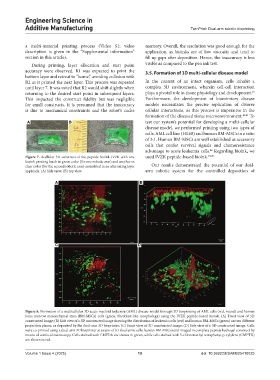
            Figure 7. Acellular 3D construct of the peptide bioink IVZK with one   used IVZK peptide-based bioink. 19,20
            bioink printing batch in green color (for one robotic arm) and another in
            clear color (for the second robotic arm) assembled in an alternating layer   Our results demonstrated the potential of our dual-
            approach. (A) Side view; (B) top view.             arm robotic system for the controlled deposition of

                         A                                   B


                         C                                  D


            Figure 8. Formation of a multicellular 3D acute myeloid leukemia (AML) disease model through 3D bioprinting of AML cells (red, round) and human
            bone marrow mesenchymal stem (BM-MSCs) cells (green, fibroblast-like morphology) using the IVZK peptide-based bioink. (A) Front view of 3D
            constructed image; (B) Side view of a 3D constructed image showing the distribution of leukemia cells (red) and human BM-MSCs (green) on two different
            projection planes, as deposited by the dual-arm 3D bioprinter; (C) Front view of 3D constructed image; (D) Side view of a 3D constructed image. Cells
            were co-printed using a dual-arm 3D bioprinter at a ratio of 3:1 (leukemia cells: human BM-MSCs) and imaged in complete peptide hydrogel construct by
            means of confocal microscopy. Cells stained with CMFDA are shown in green, while cells stained with 5-chloromethyl tetraphenyl-p-xylylene (CMPTX)
            are shown in red.

            Volume 1 Issue 4 (2025)                         10                         doi: 10.36922/ESAM025410025

