


Page 59 - GHES-1-2
P. 59
Global Health Econ Sustain                                               Antimicrobial eco-friendly material


                                                               Table 2. The obtained critical pH points, including
                                                               additional mathematical parameters from Boltzmann fitting
                                                               Sample               Critical pH  R 2  Chi‑square
                                                               BP-g-4VP (7.2±0.9 g%)  11.0     0.95    1.10
                                                               BP-g-4VP (11.7±0.6 g%%)  6.8    0.97    1.06
                                                               BP-g-4VP (18.8±0.9 g%)  5.5     0.96    1.49
                                                               BP-g-4VP (22.7±0.5 g%)  5.8     0.95    1.96
                                                               BP-g-4VP (43.4±1.7 g%)  6.0     0.97    1.61
                                                               BP-g-4VP (56.0±2.4 g%)  8.0     0.95    7.39
                                                               BP-g-4VP (64.9±1.1 g%)  7.4     0.94    2.82


                                                               Table 3. Decomposition temperatures (TD) of BP, poly
                                                               (4VP), BP‑g‑4VP, and VR‑g‑4VP Ag
                                                                                        @
                                                               T (°C)    BP    Poly     BP‑g‑4VP     BP‑g‑4VP
                                                                               (4VP)    (31.6 g%)   (31.6 g%) Ag
                                                                                                          @
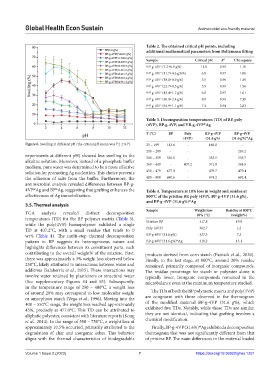
            Figure 6. Swelling at different pH (the critical pH mean was 7.2 ± 0.7).  25 – 199  143.6  -  166.8  -
                                                               200 – 299  -      -         -          293.2
            experiments at different pH) showed less swelling in the   300 – 359  330.5  -  352.5     335.7
            alkaline solution. Moreover, instead of a phosphate buffer
            medium, pure water was determined to be a more effective   360 – 449  -  407.2  371.8     364.5
            solution for promoting Ag nucleation. This choice prevents   450 – 479  477.0  -  479.7   479.4
            the adhesion of salts from the buffer. Furthermore, the   480 – 800  690.6  -  674.2      692.4
            antimicrobial analysis revealed differences between BP-g-
            4VP Ag and BP Ag, suggesting that grafting enhances the   Table 4. Temperature at 10% loss in weight and residue at
                         @
               @
            effectiveness of Ag immobilization.                800°C of the pristine BP, poly (4VP), BP‑g‑4VP (31.6 g%),
                                                               and BP‑g‑4VP (31.6 g%) Ag
                                                                                 @
            3.5. Thermal analysis
                                                               Sample               Weight loss   Residue at 800°C
            TGA    analysis  revealed  distinct  decomposition                       10% (°C)      (weight%)
            temperatures (TD) for the BP polymer matrix (Table 3),   Pristine BP      317.8          19.9
            while the poly(4VP) homopolymer exhibited a single
            TD at 407.2°C, with a small residue that tends to 0   Poly (4VP)          362.7           1.2
            wt% (Table 4). The multi-step thermal decomposition   BP-g-4VP (31.6 g%)  327.3           7.2
            pattern in BP suggests its heterogeneous nature and   BP-g-4VP (31.6 g%) Ag  318.2       13.1
                                                                            @
            highlights differences between its constituent parts, each
            contributing to the overall weight% of the mixture. First,   products derived from corn starch (Patnaik et al., 2020).
            there was approximately a 3% weight loss observed below   Finally,  in the last  stage, at  800°C, around 20%  residue
            250°C, likely attributed to interactions between water and   remained, primarily composed of inorganic compounds.
            additives (Salaberria et al., 2015). These interactions may   The residue percentage for starch or polyester alone is
            involve water retained by plasticizers or structural water   typically lower. Inorganic compounds remained in the
            (See  supplementary  Figures  S4 and  S5).  Subsequently,   microbalance even at the maximum temperature studied.
            in the temperature range of 250 – 400°C, a weight loss
            of around 20% may correspond to low molecular weight   The TDs of both the BP polymeric matrix and poly(4VP)
            or amorphous starch (Vega et al., 1996). Moving into the   are congruent with those observed in the thermogram
            400 – 550°C range, the weight loss reached approximately   of  the  modified  material  BP-g-4VP  (31.6  g%),  which
            45%, precisely at 477.0°C. This TD can be attributed to   exhibited five TDs. Notably, while these TDs are similar,
            aliphatic polyester, consistent with literature reports (Kong   they are not identical, indicating that grafting involves a
            et al., 2014). In the range of 550 – 750°C, a weight loss of   chemical modification.
            approximately 10.5% occurred, primarily attributed to the   Finally, BP-g-4VP (31.6%) Ag exhibited a decomposition
                                                                                      @
            degradation  of  char  and  inorganic  ashes.  This  behavior   thermogram that was not significantly different from that
            aligns with the thermal characteristics of biodegradable   of pristine BP. The main differences in the material loaded


            Volume 1 Issue 2 (2023)                         7                        https://doi.org/10.36922/ghes.1251

