


Page 162 - GHES-2-2
P. 162
Global Health Econ Sustain                                         An analysis of national economic resilience


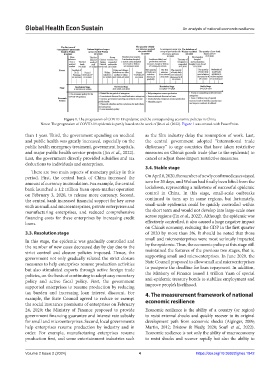
                            Figure 1. The progression of COVID-19 epidemic and the corresponding economic policies in China
                  Notes: The progression of COVID-19 epidemic is partly based on the work of Jin et al. (2022). Figure 1 was created with PowerPoint.

            than 1 year. Third, the government spending on medical   as the film industry delay the resumption of work. Last,
            and public health was greatly increased, especially on the   the central government adopted “international trade
            public health emergency treatment, government hospitals,   diplomacy” to urge countries that have taken restrictive
            and major public health service projects (Jin et al., 2022).   measures on China’s goods trade (due to the epidemic) to
            Last, the government directly provided subsidies and tax   cancel or adjust these import restrictive measures.
            deductions to individuals and enterprises.
                                                               3.4. Stable stage
              There are two main aspects of monetary policy in this
            period. First, the central bank of China increased the   On April 8, 2020, the number of newly confirmed cases stayed
            amount of currency in circulation. Fox example, the central   zero for 20 days, and Wuhan had finally been lifted from the
            bank launched a 1.2 trillion Yuan open-market operation   lockdown, representing a milestone of successful epidemic
            on February 3, 2020, to release more currency. Second,   control in China. In this stage, small-scale outbreaks
            the central bank increased financial support for key areas   continued to turn up in some regions, but fortunately,
            such as small and microenterprises, private enterprises and   small-scale epidemics could be quickly controlled within
            manufacturing enterprises,  and  reduced  comprehensive   the short term and would not develop into large-scale ones
            financing costs for these enterprises by increasing credit   across regions (Jin et al., 2022). Although the epidemic was
            loans.                                             effectively controlled, it also caused a huge negative impact
                                                               on China’s economy, reducing the GDP in the first quarter
            3.3. Resolution stage                              of 2020 by more than 3%. It should be noted that those
            In this stage, the epidemic was gradually controlled and   small and microenterprises were most seriously impacted
            the number of new cases decreased day by day due to the   by the epidemic. Thus, the economic policy at this stage still
            strict control and closure policies imposed. Hence, the   maintained the features of the previous two stages, that is,
            government not only gradually relaxed the strict closure   supporting small and microenterprises. In June 2020, the
            measures to help enterprises resume production activities   State Council proposed to allow small and microenterprises
            but also stimulated exports through active foreign trade   to postpone the deadline for loan repayment. In addition,
            policies, on the basis of continuing to adopt easy monetary   the Ministry of Finance issued 1 trillion Yuan of special
            policy and active fiscal policy. First, the government   anti-epidemic treasury bonds to stabilize employment and
            supported enterprises to resume production by reducing   improve people’s livelihood.
            tax  burden  and  increasing  loan  interest  discount.  For   4. The measurement framework of national
            example, the State Council agreed to reduce or exempt   economic resilience
            the social insurance premiums of enterprises on February
            24, 2020; the Ministry of Finance proposed to provide   Economic resilience is the ability of a country (or region)
            government financing guarantee and interest rate subsidy   to resist external shocks and quickly recover to its original
            for small and microenterprises. Second, local governments   development path from economic shocks (Aiginger, 2009;
            help enterprises resume production by industry and in   Martin,  2012;  Bristow &  Healy,  2020;  Soufi  et al.,  2022).
            order. For example, manufacturing enterprises resume   Economic resilience is not only the ability of macroeconomy
            production first, and some entertainment industries such   to  resist shocks  and  recover rapidly  but  also the  ability  to


            Volume 2 Issue 2 (2024)                         4                        https://doi.org/10.36922/ghes.1842

