


Page 166 - GHES-2-2
P. 166
Global Health Econ Sustain                                         An analysis of national economic resilience


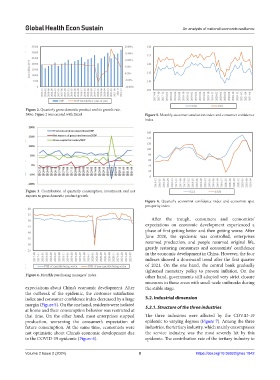
            Figure 2. Quarterly gross domestic product and its growth rate.
            Note: Figure 2 was created with Excel              Figure 5. Monthly customer satisfaction index and consumer confidence
                                                               index


            Figure 3. Contribution of quarterly consumption, investment, and net
            exports to gross domestic product growth
                                                               Figure  6. Quarterly economist confidence index and economist spot
                                                               prosperity index

                                                                 After the trough, consumers and economists’
                                                               expectations on economic development experienced a
                                                               phase of first getting better and then getting worse. After
                                                               June 2020, the epidemic was controlled, enterprises
                                                               resumed production, and people resumed original life,
                                                               greatly restoring consumers and economists’ confidence
                                                               in the economic development in China. However, the four
                                                               indexes showed a downward trend after the first quarter
                                                               of 2021. On the one hand, the central bank gradually
                                                               tightened monetary policy to prevent inflation. On the
            Figure 4. Monthly purchasing managers’ index       other hand, governments still adopted very strict closure
                                                               measures in those areas with small-scale outbreaks during
            expectations about China’s economic development. After   the stable stage.
            the outbreak of the epidemic, the customer satisfaction
            index and consumer confidence index decreased by a large   5.2. Industrial dimension
            margin (Figure 5). On the one hand, residents were isolated   5.2.1. Structure of the three industries
            at home and their consumption behavior was restricted at
            that time. On the other hand, most enterprises stopped   The three industries were affected by the COVID-19
            production, worsening the consumer’s expectation of   epidemic to varying degrees (Figure 7). Among the three
            future consumption. At the same time, economists were   industries, the tertiary industry, which mainly encompasses
            not optimistic about China’s economic development due   the service industry, was the most severely hit by this
            to the COVID-19 epidemic (Figure 6).               epidemic. The contribution rate of the tertiary industry to


            Volume 2 Issue 2 (2024)                         8                        https://doi.org/10.36922/ghes.1842

