


Page 205 - GHES-3-2
P. 205
Global Health Economics and
            Sustainability
                                                                                      Gender inequality and healthcare


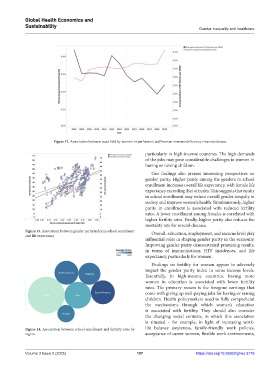
                        Figure 12. Association between seats held by women in parliament and human immunodeficiency virus incidences

                                                               particularly in high-income countries. The high demands
                                                               of the jobs may pose considerable challenges to women in
                                                               having or raising children.
                                                                 Our findings also present interesting perspectives on
                                                               gender parity. Higher parity among the genders in school
                                                               enrollment increases overall life expectancy, with female life
                                                               expectancy exceeding that of males. This suggests that equity
                                                               in school enrollment may reduce overall gender inequity in
                                                               society and improve women’s health. Simultaneously, higher
                                                               parity in enrollment is associated with reduced fertility
                                                               rates. A lower enrollment among females is correlated with
                                                               higher fertility rates. Finally, higher parity also reduces the
                                                               mortality rate for several diseases.
            Figure 13. Association between gender parity index in school enrollment   Overall, education, employment, and income level play
            and life expectancy
                                                               influential roles in shaping gender parity in the economy.
                                                               Improving gender parity demonstrated promising results,
                                                               in terms of immunizations, HIV  incidences, and life
                                                               expectancy, particularly for women.

                                                                 Findings on fertility for women appear to adversely
                                                               impact the gender parity index in some income levels.
                                                               Essentially, in high-income countries, having more
                                                               women in education is associated with lower fertility
                                                               rates. The primary reason is the foregone earnings that
                                                               come with giving up well-paying jobs for having or raising
                                                               children. Health policymakers need to fully comprehend
                                                               the mechanisms through which women’s education
                                                               is associated with fertility. They should also consider
                                                               the  changing  social  contexts,  in  which  this  association
                                                               is situated – for example, in light of increasing work-
            Figure 14. Association between school enrollment and fertility rates by   life  balance  awareness,  family-friendly  work  policies,
            region                                             acceptance of career women, flexible work environments,


            Volume 3 Issue 2 (2025)                        197                       https://doi.org/10.36922/ghes.5776

