


Page 61 - GPD-2-4
P. 61
Gene & Protein in Disease                                             K fragment for resistance gene hunting


            A                                                  bacteria harboring resistance gene need to be cultivable
                                                               under laboratory conditions, but the challenges lie in the
                                                               non-cultivability of numerous micro-organisms or the
                                                               exorbitant costs and immense labor that need to be invested
                                                               for culturing. Molecular methods are ideal for the detection
                                                               of known genes but they are incapable of characterizing
                                                               unknown genes. Thus, cloning and determining resistance
            B                                                  genes remain the most feasible approach to characterizing
                                                               unknown resistance genes. In this study, K fragment was
                                                               developed to clone antibiotic resistance genes, and its
                                                               functionality was tested by cloning resistance genes from
                                                               PCR amplicon and genomic DNA. The present study also
                                                               demonstrated  the capabilities of  the newly developed
                                                               method involving K fragment in phenotypic and molecular
                                                               characterization of resistance genes.

                                                                 One of the earliest and most common molecular
                                                               methods for resistance gene cloning is shotgun cloning [17,18] .
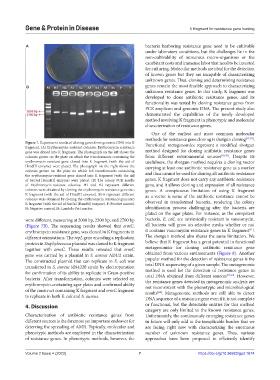
            Figure 7. Experiment results of cloning genes from genomic DNA into K   Functional  metagenomics  represent  a  modified  shotgun
            fragment. (A) Erythromycin-resistant colonies. Erythromycin resistance
            gene was cloned into K fragment. The photograph on the left shows the   method designed for cloning antibiotic resistance genes
            colonies grown on the plate on which the transformants containing the   from different environmental sources [19,20] . Despite its
            erythromycin-resistant gene cloned into K fragment (with the aid of   usefulness, the shotgun method requires a cloning vector
            HindIII enzyme) were plated. The photograph on the right shows the   carrying at least one antibiotic resistance gene as a marker
            colonies grown on the plate on which teh transformants containing   and thus cannot be used for cloning all antibiotic resistance
            the erythromycin-resistant gene cloned into K fragment (with the aid
            of Sau3aI [BamHI] enzyme) were plated. (B) The colony PCR results   genes. K fragment does not carry any antibiotic resistance
            of Erythromycin-resistant colonies. H1 and H2 represent different   gene, and it allows cloning and expression of all resistance
            colonies were obtained by cloning the erythromycin resistance gene into   genes. A  conspicuous limitation of using K fragment
            K fragment (with the aid of HindIII enzyme). S1-6 represent different   as a vector is some of the antibiotic resistance cannot be
            colonies were obtained by cloning the erythromycin resistance gene into   observed in transformed bacteria, rendering the colony
            K fragment (with the aid of Sau3aI [BamHI] enzyme). P: Positive control,
            N: Negative control, M: Lambda-PstI marker.        identification process challenging after the bacteria are
                                                               plated on the agar plates. For instance, as the competent
            were different, measuring at 2000 bp, 2300 bp, and 2700 bp   bacteria, E. coli, are intrinsically resistant to vancomycin,
            (Figure  7B). The sequencing results showed that  ermC,   all bacteria will grow on selective media whether or not
                                                                                                           [21]
            erythromycin resistance gene, was cloned in K fragments in   it contains vancomycin resistance genes in K fragment .
            different orientations. The repL gene encoding a replication   The shotgun method also shares the same limitation. We
            protein in Staphylococcus plasmid was cloned to K fragment   believe that K fragment has a great potential in functional
            together with  ermC. These results revealed that  ermC   metagenomics for cloning antibiotic resistance gene
            gene was carried by a plasmid in S. aureus ADU2 strain.   obtained from various environments (Figure 8). Another
            The constructed plasmid that can replicate in E. coli was   popular method for the detection of resistance genes is the
            transferred to S. aureus RN4220 strain by electroporation   total DNA sequencing of a given sample. The metagenomic
            for confirmation of its ability to replicate in Gram-positive   method is used for the detection of resistance genes in
                                                                                                 [22,23]
            bacteria. After transformation, colonies were selected on   total DNA obtained from different sources  . However,
                                                               the resistance genes detected in metagenomic analysis are
            erythromycin-containing agar plates and confirmed ability   not inconsistent with the phenotypic and microbiological
            of the construct containing K fragment and ermC fragment   results . Metagenomic methods are still able to detect
                                                                    [24]
            to replicate in both E. coli and S. aureus.        DNA sequence of a resistance gene even if it is not complete
            4. Discussion                                      or functional, but the detectable entities for this method
                                                               category are only limited to the known resistance genes.
            Characterization  of  antibiotic  resistance  genes  from   Unfortunately, the continuously emerging resistance genes
            different sources is the foremost yet important endeavor for   in future will only add to the inexplicable burden that we
            deterring the spreading of AMR. Typically, molecular and   are facing right now with characterizing the enormous
            phenotypic methods are employed in the characterization   number  of unknown  resistance genes. Thus,  various
            of resistance genes. In phenotypic methods, however, the   approaches  have  been  proposed to  efficiently identify


            Volume 2 Issue 4 (2023)                         7                        https://doi.org/10.36922/gpd.1674

