


Page 13 - GPD-3-3
P. 13
Gene & Protein in Disease                                         Comprehensive analysis of ZNF521/Zfp521


            differentiation,  including preosteoblasts, osteoblasts , and   chondrocytes leads to decreased proliferation, accelerated
                        2
                                                     30
            osteocytes.  The expression pattern and nuclear localization   chondrocyte differentiation, and increased cell death. 19,56
                    9
            showed that Zfp521 plays a role in gene transcriptional   Therefore, it can partially repair the defects of hypertrophic
            regulation during osteoblast differentiation,  and the loss   chondrocyte differentiation, thus forming endochondral
                                               2
            of Zfp521 in germ cells results in bone loss,  indicating   bone.  PTHrP is one of the regulators of bone formation
                                                2,7
                                                                   56
            that Zfp521 is essential for osteoblast differentiation and   in cartilage. 15,19,56  The loss of its expression or receptor
            bone matrix formation. 2                           (PTHR1) leads to its loss of function, inducing severe bone
                                                                                       56
              The expression of Zfp521 is suppressed by BMP2,   deformity and perinatal death.  Zfp521 plays an important
            which can induce osteoblast differentiation and    role in controlling cell differentiation 2,15,19,55  and apoptosis
                                                                                                        56
            maturation. 2,15,51,55  In addition, parathyroid hormone-  by mediating the effect of PTHrP on chondrocytes.  As a
            related protein (PTHrP)-1-34, which is conducive to cell   downstream factor of PTHR1 signaling, Zfp521 is required
            proliferation but antagonizes osteoblast differentiation, can   for chondrocyte proliferation, differentiation, and cell
            increase the expression of Zfp521 and accelerate osteoblast   death. 56,57  In the absence of Zfp521, PTHrP could neither
            proliferation. 15,55  Zfp521 can also interact with RUNX2   up-regulate cyclin D1 nor antagonize the expression of
            to inhibit its transcriptional activity 9,24,55,56  (Figure  4).   RUNX2, Ihh, and Collagen X, and Bcl2 expression is
                                                                           19
            The specific mechanism is as follows: Zfp521 physically   also  decreased,   while  the  PTHR1  signaling  pathway  is
                                                                        56
            interacts with RUNX2 to antagonize RUNX2-induced   stimulated.  In fact, Zfp521 mediates a negative feedback
            target gene activation,  while RUNX2 overexpression   loop that down regulates the expression of PTHR1 in pre-
                               8
            dose-dependently reverses the inhibition of Zfp521-  hypertrophic chondrocytes, thereby further promoting
                                                                                                          19
            induced osteoblast phenotype. 2,24,55,57,59  Therefore, Zfp521   the regulation of PTHrP on growth plate function.  In
            seems to inhibit the early stage of osteoblast differentiation   summary, Zfp521 is a key mediator of PTHrP in regulating
                                                                                     56
            by restraining the activity of RUNX2, but it is beneficial   chondrocyte differentiation  (Figure 5).
            to the function of osteoblasts in the later stage. 2,24,55,59  The   Zfp521  also  controls the  transcriptional  activity  of
            effect of high bone mass  Zfp521 on  mouse EBF1  may   RUNX2 during chondrocyte differentiation, and its
            also be involved in the regulation of Zfp521 on osteoblast   inhibition of RUNX2 in chondrocytes is dependent on
            differentiation and function. 2,42                 HDAC4 and HDAC3, respectively.  In chondrocytes,
                                                                                             15
                                                               Zfp521 acts downstream of parathyroid hormone-related
            4.3. Roles of ZNF521/Zfp521 in chondrogenic        peptides, inhibiting RUNX2 and increasing growth
            differentiation                                    plate thickness. 19,47  Moreover, Zfp521 is identified as a
            ZNF423, ZNF470, ZNF521, and ZNF780B may be         co-inhibitor of RUNX2, 2,51,56  indicating that Zfp521 plays
            involved in the physiological regulation of articular   a role in blocking RUNX2 expression and activity 55-57
            chondrocyte homeostasis.  Zfp521 is expressed in all   (Figure 5). Therefore, Zfp521 is an important regulator of
                                 9
            regions of the growth plate, and the removal of Zfp521 from   growth plate differentiation 19,47  and endochondral bone


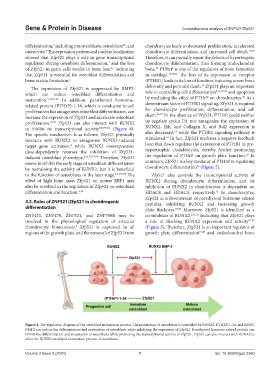
            Figure 4. The regulation diagram of the osteoblast maturation process. The maturation of osteoblasts is controlled by RUNX2, PTHRP-1-34, and BMP2.
            BMP2 can induce the differentiation and maturation of osteoblasts while inhibiting the expression of Zfp521. Parathyroid hormone-related protein can
            inhibit the differentiation and maturation of osteoblasts while promoting the transcriptional activity of Zfp521. Zfp521 can also interact with RUNX2 to
            affect the RUNX2-mediated maturation process of osteoblasts.


            Volume 3 Issue 3 (2024)                         7                               doi: 10.36922/gpd.3260

