


Page 161 - GPD-4-1
P. 161
Gene & Protein in Disease                                         FXR1 modulates gene expression in cancer


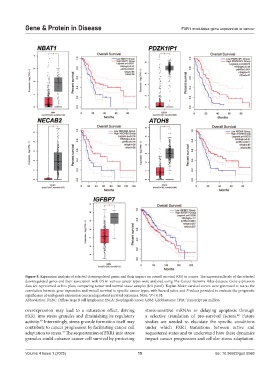
            Figure 8. Expression analysis of selected downregulated genes and their impact on overall survival (OS) in cancer. The expression levels of the selected
            downregulated genes and their association with OS in various cancer types were analyzed using The Cancer Genome Atlas datasets. Gene expression
            data are represented as box plots, comparing tumor and normal tissue samples (left panel). Kaplan-Meier survival curves were generated to assess the
            correlation between gene expression and overall survival in specific cancer types, with hazard ratios and P-values provided to evaluate the prognostic
            significance of each gene’s expression concerning patient survival outcomes. Note: *P < 0.05.
            Abbreviation: DLBC: Diffuse large B cell lymphoma; ESCA: Esophageal cancer; GBM: Glioblastoma; TPM: Transcript per million.

            overexpression  may  lead  to  a  saturation  effect,  driving   stress-sensitive mRNAs or delaying apoptosis through
            FXR1 into stress granules and diminishing its regulatory   a selective translation of pro-survival factors.  Future
                                                                                                      42
            activity.  Interestingly, stress granule formation itself may   studies are needed to elucidate the specific  conditions
                  40
            contribute to cancer progression by facilitating cancer cell   under which FXR1 transitions between active and
            adaptation to stress.  The sequestration of FXR1 into stress   sequestered states and to understand how these dynamics
                           41
            granules could enhance cancer cell survival by protecting   impact cancer progression and cellular stress adaptation.

            Volume 4 Issue 1 (2025)                         15                              doi: 10.36922/gpd.5068

