


Page 64 - GTM-2-3
P. 64
Global Translational Medicine                                   Influence of ferroptosis in neurological diseases


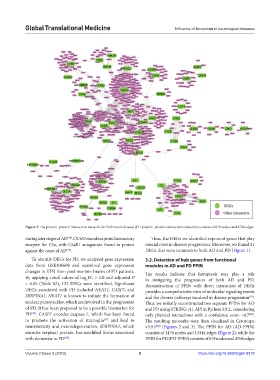
            Figure 3. The protein–protein interaction network for Parkinson’s disease (PD protein–protein interaction networks) consists of 819 nodes and 4766 edges.
            during later stages of AD . C5AR1 encodes a proinflammatory   Thus, the DEGs we identified represent genes that play
                              [34]
            receptor  for  C5a,  with  C5aR1  antagonists found to protect   crucial roles in disease progression. Moreover, we found 21
            against the onset of AD .                          DEGs that were common to both AD and PD (Figure 1).
                             [35]
              To identify DEGs for PD, we analyzed gene expression   3.2. Detection of hub genes from functional
            data from GSE106608 and examined gene expression   modules in AD and PD PPIN
            changes in STN from post-mortem brains of PD patients.   The results indicate that ferroptosis may play a role
            By applying cutoff values of log FC > 1.0 and adjusted P   in instigating the progression of both AD and PD.
                                      2
            < 0.05 (Table S2), 122 DEGs were identified. Significant   Reconstruction of PPIN with direct interactors of DEGs
            DEGs associated with PD included NEAT1, CASP7, and   provides a comprehensive view of molecular signaling events
            SERPINA1. NEAT1 is known to initiate the formation of   and the diverse pathways involved in disease progression .
                                                                                                           [39]
            nuclear paraspeckles, which are involved in the progression   Thus, we initially reconstructed two separate PPINs for AD
            of PD. It has been proposed to be a possible biomarker for   and PD using STRING v11 API in Python 3.9.2., considering
            PD . CASP7 encodes caspase-7, which has been found   only physical interactions with a confidence score >0.7 .
              [36]
                                                                                                           [40]
            to  promote the activation  of microglia   and lead  to   The resulting networks were then visualized in Cytoscape
                                             [37]
            neurotoxicity and neurodegeneration.  SERPINA1, which   v3.9.1  (Figures 2 and 3). The PPIN for AD (AD-PPIN)
                                                                   [24]
            encodes serpina1 protein, has modified forms associated   consists of 1478 nodes and 13344 edges (Figure 2), while the
            with dementia in PD .                              PPIN for PD (PD-PPIN) consists of 819 nodes and 4766 edges
                            [38]
            Volume 2 Issue 3 (2023)                         5                        https://doi.org/10.36922/gtm.0318

