


Page 66 - GTM-2-3
P. 66
Global Translational Medicine                                   Influence of ferroptosis in neurological diseases


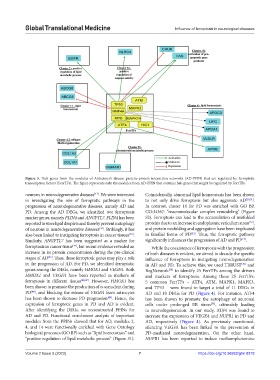
            Figure  5.  Hub genes from the modules of Alzheimer’s disease protein–protein interaction networks (AD-PPIN) that are regulated by ferroptotic
            transcription factors (FerrTFs). The figure represents only the modules from AD-PPIN that contains hub genes that might be regulated by FerrTFs.

            neurons in neurodegenerative diseases . We were interested   Coincidentally, abnormal lipid homeostasis has been shown
                                         [41]
            in investigating the role of ferroptotic pathways in the   to not only drive ferroptosis but also aggravate AD [50,51] .
            progression of neurodegenerative diseases, namely AD and   In contrast, cluster 14 for PD was enriched with GO BP,
            PD. Among the AD DEGs, we identified two ferroptosis   GO:34367: “macromolecular complex remodeling” (Figure
            marker genes, namely PLIN4 and ANGPTL7. PLIN4 has been   S2). Ferroptosis can lead to the accumulation of misfolded
                                                                                                           [52]
            reported to store lipid droplets and thereby prevent mitophagy   proteins due to an increase in endoplasmic reticulum stress ,
            of neurons in neurodegenerative diseases . Strikingly, it has   and protein misfolding and aggregation have been implicated
                                           [42]
                                                                                  [53]
            also been linked to instigating ferroptosis in cancer tissues .   in familial forms of PD . Thus, the ferroptotic pathway
                                                        [43]
                                                                                                        [13]
            Similarly,  ANGPTL7 has been suggested as a marker for   significantly influences the progression of AD and PD .
            ferroptosis in cancer tissue , but recent evidence revealed an   While the coexistence of ferroptosis with the progression
                                [44]
            increase in its protein concentration during the pre-clinical   of both diseases is evident, we aimed to decode the specific
                      [45]
            stages of AD . Thus, these ferroptotic genes may play a role   influence of ferroptosis in instigating neurodegeneration
            in the progression of AD. For PD, we identified ferroptotic   in AD and PD. To achieve this, we used TRRUST  and
                                                                                                        [29]
            genes among the DEGs, namely HMOX1 and VEGFA. Both   RegNetwork  to identify 25 FerrTFs among the drivers
                                                                         [30]
            HMOX1 and  VEGFA have been reported as markers of   and  markers  of  ferroptosis.  Among  these  25  FerrTFs,
            ferroptosis in different tissues [46,47] . However,  HMOX1 has   5 common FerrTFs – ATF4, ATM, MAPK1, MAPK3,
            been shown to promote the production of α-synuclein during   and TP53 – were found to target a total of 11 DEGs in
            PD , and blocking the release of VEGFA from astrocytes   AD and 10 DEGs for PD (Figure 4). For instance, ATF4
              [48]
            has been shown to decrease PD progression . Hence, the   has been shown to promote the autophagy of neuronal
                                               [49]
            expression of ferroptotic genes in PD and AD is evident.   cells under prolonged ER stress , ultimately leading
                                                                                           [54]
            After  identifying  the  DEGs,  we  reconstructed  PPINs  for   to neurodegeneration. In our study, ATF4 was found to
            AD and PD. Functional enrichment analysis of important   increase the expression of VEGFA and NUPR1 in PD and
            modules from the PPINs showed that for AD, modules 2,   AD, respectively (Figure  4). As previously mentioned,
            4, and 14 were functionally enriched with Gene Ontology   silencing VEGFA has been linked to the prevention of
            biological processes (GO BP) such as “lipid homeostasis” and   PD-mediated neurodegeneration. On the other hand,
            “positive regulation of lipid metabolic process” (Figure S1).   NUPR1  has  been  reported  to induce  methamphetamine

            Volume 2 Issue 3 (2023)                         7                        https://doi.org/10.36922/gtm.0318

