


Page 49 - IJAMD-1-2
P. 49
International Journal of AI for
            Materials and Design
                                                                                  A unified ILKM in smart manufacturing


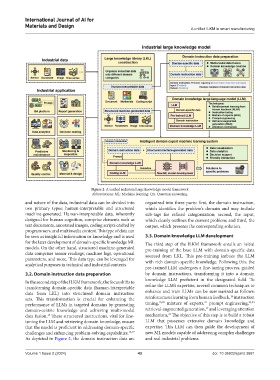
                                        Figure 2. A unified industrial large knowledge model framework
                                        Abbreviations: ML: Machine learning; QA: Question answering.
            and nature of the data, industrial data can be divided into   organized into three parts: first, the domain instruction,
            two primary types: human-interpretable and structured   which identifies the problem’s domain and may include
            machine-generated. Human-interpretable data, inherently   sub-tags for refined categorization; second, the input,
            designed for human cognition, comprise elements such as   which clearly outlines the current problem; and third, the
            text documents, annotated images, coding scripts crafted by   output, which presents the corresponding solution.
            programmers, and multimedia content. This type of data can
            be seen as insightful information or knowledge and is used   3.3. Domain knowledge LLM development
            for the later development of domain-specific knowledge ML   The third step of the ILKM framework entails an initial
            models. On the other hand, structured machine-generated   pre-training of the base LLM with domain-specific  data
            data comprises sensor readings, machine logs, operational   sourced  from  LKL.  This  pre-training  imbues  the  LLM
            parameters, and more. This data type can be leveraged for   with rich domain-specific knowledge. Following this, the
            analytical purposes in technical and industrial contexts.
                                                               pre-trained LLM undergoes a fine-tuning process, guided
            3.2. Domain instruction data preparation           by domain instructions, transforming it into a domain
                                                               knowledge LLM proficient in the designated field. To
            In the second step of the ILKM framework, the focus shifts to
            transforming  domain-specific  data  (human-interpretable   refine the LLM’s expertise, several common techniques to
            data from LKL) into structured domain instruction   enhance and train LLMs can be summarized as follows:
                                                                                                   18
            sets. This transformation is crucial for enhancing the   reinforcement learning from human feedback,  instruction
                                                                                        21
            performance of LLMs in targeted domains by generating   tuning, 19,20  mixture of experts,  prompt engineering, 22,23
                                                                                         17
            domain-centric knowledge and achieving multi-modal   retrieval-augmented generation,  and leveraging attention
                                                                         24
            data fusion.  These structured instructions, vital for fine-  mechanism,  The objective of this step is to build a robust
                     15
            tuning the LLM and retrieving domain knowledge, ensure   LLM that possesses extensive domain knowledge and
            that the model is proficient in addressing domain-specific   expertise. This LLM can then guide the development of
            challenges and enhancing problem-solving capabilities. 16,17    new ML models capable of addressing complex challenges
            As depicted in Figure 2, the domain instruction data are   and real industrial problems.

            Volume 1 Issue 2 (2024)                         43                             doi: 10.36922/ijamd.3681

