


Page 72 - IJAMD-1-2
P. 72
International Journal of AI for
            Materials and Design
                                                                               Machine learning for gel fraction prediction


            techniques, decision tree-based techniques, and neural   ω  x +ω  x  was replaced with ω  x  in feature groups 2
                                                                     P
                                                                                           a
                                                                                             a
                                                                   P
                                                                        t
                                                                          t
            networks in predicting the gel fraction was compared.   and 3, while  ω GelMA  x GelMA +ω LAP  x LAP -ω PEDOT  x PEDOT  was
            The brief introduction and the tuning parameters for the   removed in feature group 2.
            models are detailed in the following section.
                                                               2.4.2. SVR
            2.4.1. LR
                                                               The SVR model, a widely used ML regression technique,
              The LR technique was selected for its simplicity and   was employed to compare its accuracy with the LR
            interpretability. LR is ideal for identifying and quantifying   model as both are regression-based methods. SVR
            linear relationships between inputs and outputs. Its   enhances performance over LR in the presence of outliers
            straightforward nature provides a baseline model for   by maximizing the number of data points within the
            comparison with more complex algorithms. In addition,   hyperplane area.  To achieve a non-LR, the RBF kernel
                                                                            51
            when the relationship between variables is approximately   was utilized. The regularization parameter C was set to 993
            linear, LR can deliver fast and reliable predictions. The   and γ to 0.57 for feature Group 1, while C was 130 and γ
            LR model, represented in Equation IV, is fitted using the   was 0.53 for feature Groups 2 and 3. The gamma was set to
            ordinary least square method. In this work,  x GelMA ,  x LAP ,   “scale” for all feature groups (1/(n_features * X.var())), and
            and  x PEDOT   are  the  concentration  of  GelMA,  LAP,  and   the tolerance for the stopping criterion was 0.001.
            PEDOT:SPSS, respectively. x  is the UV power intensity, x   t
                                   p
            is the UV duration, and x  is the absorption coefficient. ω   2.4.3. Decision tree regression
                                 a
            are the coefficients to be fitted.                 DTR was selected for its adeptness at mapping complex
            y  = ω    x   +ω    x  -ω    x   +ω  x +ω  x +ω    decision paths based on input parameters. Unlike
             Gel  GelMA  GelMA  LAP  LAP  PEDOT  PEDOT  P  P  t  t  c
                                                       (IV)    regression-based  techniques,  decision  trees  excel  at

                               B


                         A
                                                                      C


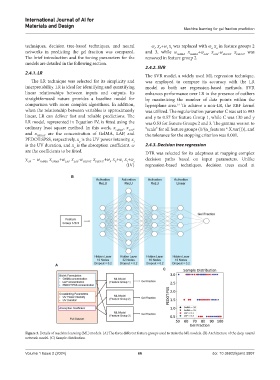
            Figure 3. Details of machine learning (ML) models. (A) The three different feature groups used to train the ML models. (B) Architecture of the deep neural
            network model. (C) Sample distribution


            Volume 1 Issue 2 (2024)                         66                             doi: 10.36922/ijamd.3807

