


Page 75 - IJAMD-1-2
P. 75
International Journal of AI for
            Materials and Design
                                                                               Machine learning for gel fraction prediction


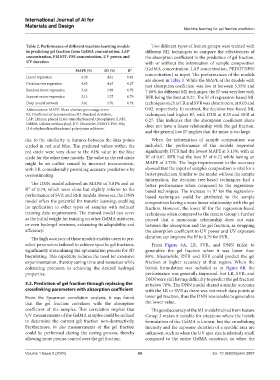
            Table 2. Performance of different machine learning models   Two different types of feature groups were trained with
            in predicting gel fraction from GelMA concentration, LAP   different ML techniques to compare the effectiveness of
            concentration, PEDOT: PSS concentration, UV power, and   the absorption coefficient in the prediction of gel fraction,
            UV duration                                        with or without the information of sample composition
                                 MAPE (%)    SD (%)    R²      (GelMA concentration, LAP concentration, PEDOT:SPSS
            Linear regression       6.28       4.61    0.41    concentration) as input. The performances of the models
                                                               are shown in Table 3. While the MAPE of the models with
            Decision tree regression  4.05     4.63    0.67    just absorption coefficient was low at between 5.55% and
            Random forest regression  3.42     3.99    0.76    7.88% for different ML technique, the R  was very low with
                                                                                              2
            Support vector regression  3.13    3.75    0.79    RFR being the best at 0.27. The R  of regression-based ML
                                                                                         2
            Deep neural network     3.81       3.70    0.74    techniques such as LR and SVR was close to zero, at 0.03 and
            Abbreviations: MAPE: Mean absolute percentage error;   0.02, respectively. In contrast, the decision tree-based ML
                                                                                   2
            R2: Coefficient of determination; SD: Standard deviation,   techniques had higher R , with DTR at 0.25 and RFR at
            LAP: Lithium phenyl (2,4,6-trimethylbenzoyl) phosphinate (LAP),   0.27. This indicates that the absorption coefficient alone
            GelMA: Gelatin methacryloyl, UV: Ultraviolet, PEDOT: PSS: Poly   does not have a linear relationship with the gel fraction,
            (3,4-ethylenedioxythiophene) polystyrene sulfonate.
                                                               and the general low R  implies that the noise is too large.
                                                                                2
            due to the similarity in features between the data points   When  the information  of sample  composition  was
            circled in red and blue. The predicted values within the   included, the performance of the models improved
            red  circle  were  very  close  to  the  61%  value  in  the  blue   significantly. DTR had the lowest MAPE at 3.13%, with an
                                                                                         2
                                                                2
            circle for the other four models. The value in the red circle   R  of 0.67. RFR had the best R  of 0.72 while having an
            might be an outlier caused by incorrect measurement,   MAPE of 3.79%. The huge improvement in the accuracy
            with LR coincidentally providing accurate predictions by   showed that the input of sample’s composition is vital for a
            overestimating.                                    better prediction. Similar to the model without the sample
                                                               information, the  decision  tree-based techniques  had a
              The DNN model achieved an MAPE of 3.81% and an   better performance when compared to the regression-
            R² of 0.74, which were close but slightly inferior to the   based techniques. The increase in R  for the regression-
                                                                                             2
            performance of SVR and RFR models. However, the DNN   based techniques could be attributed to the sample
            model offers the potential for transfer learning, enabling   composition having a more linear relationship with the gel
            its application to other types of samples with reduced   fraction. However, the lower R  for the regression-based
                                                                                        2
            training data requirements. The trained model can serve   techniques when compared to the feature Group 1 further
            as the initial weight for training on other GelMA mixtures,   proved that a monotonic relationship does not exist
            or even hydrogel mixtures, enhancing its adaptability and   between the absorption and the gel fraction, as swapping
            efficiency.                                        the absorption coefficient to UV power and UV exposure
                                                                                     2
              The high accuracy of these models enables users to pre-  duration can improve the R to 0.79 for SVR.
            select parameters tailored to achieve specific gel fractions,   From  Figure  6A, LR, SVR, and DNN failed to
            significantly streamlining the optimization process for 3D   generalize the gel fraction when it was lower than
            bioprinting. This capability reduces the need for extensive   80%. Meanwhile, DTR and RFR could predict the gel
            experimentation, thereby saving time and resources while   fraction at higher accuracy at that region. When the
            enhancing precision in achieving the desired hydrogel   bioink formulation was included as in  Figure  6B, the
            properties.                                        performance was generally improved, but LR, SVR, and
                                                               DNN were still having difficulty to predict the gel fraction
            3.2. Prediction of gel fraction through replacing the   at below 70%. The DNN model shared a similar outcome
            crosslinking parameters with absorption coefficient  with the LR or SVR as there was not much data points at
            From the Spearman correlation analysis, it was found   lower gel fraction, thus the DNN was unable to generalize
            that the gel fraction correlates with the absorption   the lower value.
            coefficient of the samples. This correlation implies that   The good accuracy of the ML model trained from feature
            UV measurements of the GelMA samples could be utilized   Group 3 makes it suitable for situations where the bioink
            to determine the current gel fraction non-destructively.   formulation of the GelMA is known, but the crosslinking
            Furthermore,  in  situ measurements of the gel fraction   intensity and the exposure duration of a specific area are
            could be performed during the curing process, thereby   unknown, such as when the UV spot size is relatively small
            allowing more precise control over the gel fraction.  compared to the entire GelMA construct, or when the


            Volume 1 Issue 2 (2024)                         69                             doi: 10.36922/ijamd.3807

