


Page 78 - IJAMD-1-2
P. 78
International Journal of AI for
            Materials and Design
                                                                               Machine learning for gel fraction prediction


            Table 4. Performance of the best machine learning models   sample size needed for the other hydrogel model. Common
            from each feature group in predicting gel fraction  properties for the crosslinking of polymer such as monomer
                                                               reactivity ratio and extent of reaction can be included in
                                   MAPE (%)   SD (%)   R²
            Feature Group 1                                    the dataset for a more robust DNN model where the learnt
                                                               knowledge can be transferred easily between models.
             Support vector regression  3.13   3.75    0.79
            Feature Group 2                                    4. Conclusion
             Random forest regression  9.10    9.92    0.02    This study demonstrates the feasibility of predicting
            Feature Group 3                                    the gel fraction of GelMA-PEDOT:SPSS hydrogels
             Random forest regression  6.75    8.56    0.41    using  ML  models  based  on  bioink  formulation  and
             Deep neural network     6.31      5.78    0.54    crosslinking parameters. SVR emerges as the best-
            Abbreviations: MAPE: Mean absolute percentage error; R2: Coefficient   performing model, with an MAPE of only 3.13%. This high
            of determination; SD: Standard deviation.          accuracy minimizes the time and material costs typically
                                                               associated with optimizing hydrogel properties to achieve
                                                               the  required  gel fraction. Furthermore,  by replacing
                                                               crosslinking parameters with absorption coefficient, we
                                                               demonstrated the potential for estimating gel fraction
                                                               without prior crosslinking information. The DNN model
                                                               achieved an MAPE of 6.31% for this scenario, indicating
                                                               its utility for in situ gel fraction measurements via a UV
                                                               detector. This capability can significantly enhance the
                                                               fine-tuning of GelMA-PEDOT:SPSS hydrogel properties
                                                               during 3D bioprinting by allowing non-destructive,
                                                               real-time measurement of the gel fraction. Overall, this
                                                               work contributes to reducing experimental costs and
                                                               improving the precision of hydrogel crosslinking, enabling
                                                               a more efficient process in hydrogel-related research.
                                                               Consequently, this accelerates advancements in the field
                                                               of tissue regeneration, providing a robust foundation for
                                                               future studies and applications.
                                                                 Future work should explore the relationship between
                                                               gel fraction and various hydrogel properties, such as
                                                               rheological behavior, mechanical strength, and cell
                                                               viability. Integrating these data with the current models
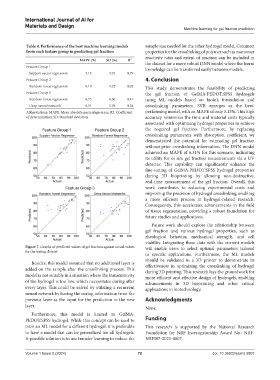
            Figure 7. Graphs of predicted values of gel fraction against actual values   will enable users to select optimal parameters tailored
            for the testing dataset
                                                               to specific applications. Furthermore, the ML models
                                                               should  be  validated  in  a  3D  printer  to  demonstrate  its
              Besides, this model assumed that no additional layer is   effectiveness in optimizing the crosslinking of hydrogel
            added on the sample after the crosslinking process. This   during 3D printing. This research lays the groundwork for
            model is not suitable in a situation where the transmittivity   more efficient and effective design of hydrogels, enabling
            of the hydrogel is too low, which necessitates curing after   advancements in 3D bioprinting and other critical
            every layer. This could be solved by utilizing a recurrent   applications in biotechnology.
            neural network by having the curing information from the
            previous layer as the input for the prediction in the new   Acknowledgments
            layer.                                             None.

              Furthermore, this model is limited to GelMA-
            PEDOT:SPSS hydrogel. While this concept can be used to   Funding
            train an ML model for a different hydrogel, it is preferable   This research is supported by the National Research
            to have a model that can be generalized for all hydrogels.   Foundation for NRF Investigatorship Award No.: NRF-
            A possible solution is to use transfer learning to reduce the   NRFI07-2021-0007.


            Volume 1 Issue 2 (2024)                         72                             doi: 10.36922/ijamd.3807

