


Page 29 - IJAMD-1-3
P. 29
International Journal of AI for
            Materials and Design
                                                                 Prediction of wall geometry for wire arc additive manufacturing


                         A                                      C


                         B


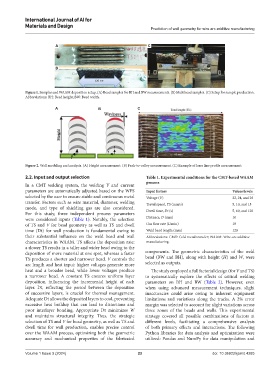
            Figure 1. Samples and WAAM deposition setup. (A) Bead samples for BH and BW measurements. (B) Multibead samples. (C) Setup for sample production.
            Abbreviations: BH: Bead height; BW: Bead width.

                         A                 B                C


            Figure 2. Wall modeling and analysis. (A) Height measurement. (B) Peak-to-valley measurement. (C) Example of laser line profile measurement.

            2.2. Input and output selection                    Table 1. Experimental conditions for the CMT‑based WAAM
                                                               process
            In a CMT welding system, the welding  V and current
            parameters are automatically adjusted based on the WFS   Input factors                  Values/levels
            selected by the user to ensure stable and continuous metal   Voltage (V)                22, 24, and 26
            transfer. Factors such as wire material, diameter, welding   Travel speed, TS (mm/s)    5, 10, and 15
            mode, and type of shielding gas are also considered.
            For this study, three independent process parameters   Dwell time, Dt (s)               5, 60, and 120
            were considered inputs (Table 1). Notably, the selection   Distance, D (mm)             10
            of TS and V for bead geometry as well as TS and dwell   Gas flow rate (L/min)           18
            time (Dt) for wall production is fundamental owing to   Weld bead length (mm)           120
            their substantial influence on the weld bead and wall   Abbreviations: CMT: Cold metal transfer; WAAM: Wire-arc additive
            characteristics in WAAM. TS affects the deposition rate:   manufacturing.
            a slower TS results in a taller and wider bead owing to the
            deposition of more material at one spot, whereas a faster   components. The geometric characteristics of the weld
            TS produces a shorter and narrower bead. V controls the   bead (BW and BH), along with height (H) and W, were
            arc length and heat input: higher voltages generate more   selected as outputs.
            heat and a broader bead, while lower voltages produce   The study employed a full factorial design (for V and TS)
            a narrower bead. A  constant TS ensures uniform layer   to systematically explore the effects of critical welding
            deposition, influencing the incremental height of each   parameters on BH and BW (Table 2). However, even
            layer. Dt, reflecting the period between the deposition   when  using  advanced  measurement  techniques,  slight
            of successive layers, is crucial for thermal management.   inaccuracies could arise owing to inherent equipment
            Adequate Dt allows the deposited layers to cool, preventing   limitations and variations along the tracks. A  2% error
            excessive heat buildup that can lead to distortions and   margin was selected to account for slight variations across
            poor  interlayer bonding. Appropriate Dt  minimizes  W   three zones of the beads and walls. This experimental
            and maintains structural integrity. Thus, the strategic   strategy  covered  all  possible  combinations  of  factors  at
            selection of TS and V for bead geometry, as well as TS and   different levels, facilitating a comprehensive analysis
            dwell time for wall production, enables precise control   of both primary effects and interactions. The following
            over the WAAM process, optimizing both the geometric   Python libraries for data analysis and optimization were
            accuracy and mechanical properties of the fabricated   utilized: Pandas and NumPy for data manipulation and


            Volume 1 Issue 3 (2024)                         23                             doi: 10.36922/ijamd.4285

