


Page 80 - IJAMD-1-3
P. 80
International Journal of AI for
            Materials and Design
                                                                            Review of gas turbine blade failures by erosion


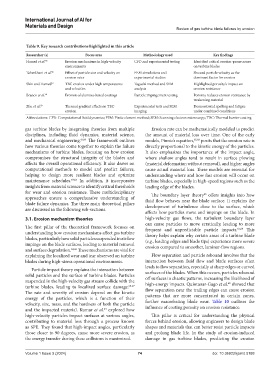
            Table 9. Key research contributions highlighted in this article
            Researcher (s)           Focus area               Methodology used              Key findings
            Hamed et al. 55  Erosion mechanisms in high-velocity   CFD and experimental testing  Identified critical erosion-prone zones
                             environments                                          on turbine blades
            Taherkhani et al. 56  Effect of particle size and velocity on   FEM simulations and   Showed particle velocity as the
                             erosion rates                experimental studies     dominant factor for erosion
            Shin and Hamed 57  TBC erosion under high temperatures   Taguchi method and SEM   Highlighted porosity’s impact on
                             and velocities               analysis                 erosion resistance
            Branco et al. 58  Erosion of alumina-based coatings  Particle impingement testing  Porosity reduces erosion resistance by
                                                                                   weakening material
            Zhu et al. 59    Thermal gradient effects on TBC   Experimental tests and SEM   Demonstrated spalling and fatigue
                             erosion                      imaging                  under combined conditions
            Abbreviations: CFD: Computational fluid dynamics; FEM: Finite element method; SEM: Scanning electron microscopy; TBC: Thermal barrier coating.
            gas turbine blades by integrating theories from multiple   Erosion rate can be mathematically modeled to predict
            disciplines, including fluid dynamics, material science,   the amount of material loss over time. One of the early
            and mechanical engineering. 60,61  The framework outlines   models, Finnie’s equation, 65,68  posits that the erosion rate is
            how various theories come together to explain the failure   directly proportional to the kinetic energy of the particles.
            mechanisms of turbine blades, focusing on how erosion   It also emphasizes the importance of the impact angle,
            compromises the structural integrity of the blades and   where shallow angles tend to result in surface plowing
            affects the overall operational efficiency. It also draws on   (material deformation without removal), and higher angles
            computational methods to model and predict failures,   cause actual material loss. These models are essential for
            helping to design more resilient blades and optimize   understanding where and how fast erosion will occur on
            maintenance schedules. 64,65  In addition, it incorporates   turbine blades, especially in high-speed regions such as the
            insights from material science to identify critical thresholds   leading edge of the blades.
            for  wear  and  erosion  resistance. These  multidisciplinary   The boundary layer theory  offers insights into how
                                                                                        66
            approaches ensure a comprehensive understanding of   fluid flow behaves near the blade surface. It explains the
            blade failure dynamics. The three main theoretical pillars   development of turbulence close to the surface, which
            are discussed in the following sub-sections.
                                                               affects how particles move and impinge on the blade. In
            3.1. Erosion mechanism theories                    high-velocity gas flows, the turbulent boundary layer
                                                               can cause particles to move erratically, leading to more
            The first pillar of the theoretical framework focuses on   frequent and unpredictable particle impacts. 67,69  This
            understanding how erosion mechanisms affect gas turbine   theory helps explain why certain areas of a turbine blade
            blades, particularly how solid particles suspended in airflow   (e.g., leading edges and blade tips) experience more severe
            impinge on the blade surfaces, leading to material removal   erosion compared to smoother, laminar-flow regions.
            and surface degradation. 62,66  These mechanisms are vital for
            explaining the localized wear and tear observed on turbine   Flow separation and particle rebound involves that the
            blades during high-stress operational environments.  interaction between fluid flow and blade surfaces often
                                                               leads to flow separation, especially at sharp edges or curved
              Particle impact theory explains the interaction between
            solid particles and the surface of turbine blades. Particles   surfaces of the blades. When this occurs, particles rebound
            suspended in the high-velocity gas stream collide with the   off surfaces in chaotic patterns, increasing the likelihood of
                                                               high-energy impacts. Quintanar-Gago et al.  showed that
                                                                                                  68
            turbine blades, leading to localized surface damage. 63,67    flow separation near the trailing edges can cause erosion
            The rate and severity of erosion depend on the kinetic
            energy of the particles, which is a function of their   patterns that are more concentrated in certain zones,
            velocity, size, mass, and the hardness of both the particle   further exacerbating blade wear.  Table  10 outlines the
                                                               influence of coating porosity on erosion resistance.
            and the impacted material. Kumar et al.  explored how
                                             64
            high-velocity particles impact surfaces at various angles,   This pillar is critical for understanding the physical
            contributing to material loss through a process known   forces behind erosion, allowing engineers to design blade
            as SPE. They found that high-impact angles, particularly   shapes and materials that can better resist particle impacts
            those closer to 90 degrees, cause more severe erosion, as   and  prolong  blade  life.  In  the  study of  erosion-induced
            the energy transfer during these collisions is maximized.  damage in gas turbine blades, predicting the erosion


            Volume 1 Issue 3 (2024)                         74                             doi: 10.36922/ijamd.5188

