


Page 89 - IJAMD-1-3
P. 89
International Journal of AI for
            Materials and Design
                                                                            Review of gas turbine blade failures by erosion


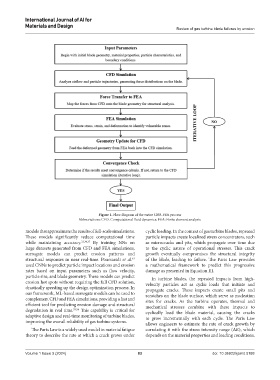
                                           Figure 1. Flow diagram of the entire CFD-FEA process
                                  Abbreviations: CFD: Computational fluid dynamics; FEA: Finite element analysis.

            models that approximate the results of full-scale simulations.   cyclic loading. In the context of gas turbine blades, repeated
            These models significantly reduce computational time   particle impacts create localized stress concentrators, such
            while maintaining accuracy. 33,34,37  By training NNs on   as microcracks and pits, which propagate over time due
            large datasets generated from CFD and FEA simulations,   to the cyclic nature of operational stresses. This crack
            surrogate  models can  predict  erosion patterns  and   growth eventually compromises the structural integrity
            structural responses in near real-time. Poursaeidi  et al.    of the blade, leading to failure. The Paris Law provides
                                                         61
            used CNNs to predict particle impact locations and erosion   a mathematical framework to predict this progressive
            rates based on input parameters such as flow velocity,   damage as presented in Equation III.
            particle size, and blade geometry. These models can predict   In turbine blades, the repeated impacts from high-
            erosion hot spots without requiring the full CFD solution,   velocity particles act as cyclic loads that initiate and
            drastically speeding up the design optimization process. In   propagate cracks. These impacts create small pits and
            our framework, ML-based surrogate models can be used to   scratches on the blade surface, which serve as nucleation
            complement CFD and FEA simulations, providing a fast and   sites  for  cracks.  As  the  turbine  operates,  thermal  and
            efficient tool for predicting erosion damage and structural   mechanical stresses combine with these impacts to
            degradation in real time. 55,56  This capability is critical for   cyclically load the blade material, causing the cracks
            adaptive design and real-time monitoring of turbine blades,   to grow incrementally with each cycle. The Paris Law
            improving the overall reliability of gas turbine systems.  allows engineers to estimate the rate of crack growth by
              The Paris Law is a widely used model in material fatigue   correlating it with the stress intensity range (ΔK), which
            theory to describe the rate at which a crack grows under   depends on the material properties and loading conditions.


            Volume 1 Issue 3 (2024)                         83                             doi: 10.36922/ijamd.5188

