


Page 54 - IJAMD-2-1
P. 54
International Journal of AI for
            Materials and Design
                                                                                     ML-based MPC for multizone BAC


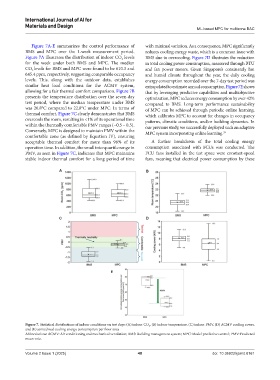
              Figure  7A-E summarizes the control performance of   with minimal variation. As a consequence, MPC significantly
            BMS and MPC over the 1-week measurement period.    reduces cooling energy waste, which is a common issue with
            Figure 7A illustrates the distribution of indoor CO  levels   BMS due to overcooling. Figure 7D illustrates the reduction
                                                     2
            for the week under both BMS and MPC. The median    in total cooling power consumption, measured through BTU
            CO levels for BMS and MPC were found to be 610.3 and   and fan power meters. Given Singapore’s consistently hot
               2
            645.4 ppm, respectively, suggesting comparable occupancy   and humid climate throughout the year, the daily cooling
            levels. This, along with the outdoor data, establishes   energy consumption recorded over the 7-day test period was
            similar heat load conditions for the ACMV system,   extrapolated to estimate annual consumption. Figure 7E shows
            allowing for a fair thermal comfort comparison. Figure 7B   that by leveraging predictive capabilities and multiobjective
            presents the temperature distribution over the seven-day   optimization, MPC reduces energy consumption by over 42%
            test period, where the median temperature under BMS   compared to BMS. Long-term performance sustainability
            was 20.8°C compared to 22.8°C under MPC. In terms of   of MPC can be achieved through periodic online learning,
            thermal comfort, Figure 7C clearly demonstrates that BMS   which calibrates MPC to account for changes in occupancy
            overcools the room, resulting in <1% of its operational time   patterns, climatic conditions, and/or building dynamics. In
            within the thermally comfortable PMV ranges (−0.5 – 0.5).   our previous study, we successfully deployed such an adaptive
            Conversely, MPC is designed to maintain PMV within the   MPC system incorporating online learning. 39
            comfortable zone (as defined by Equation IV), ensuring
            acceptable thermal comfort for more than 98% of its   A further breakdown of the total cooling energy
            operation time. In addition, the small interquartile range in   consumption associated with FCUs was conducted. The
            PMV, as seen in Figure 7C, indicates that MPC maintains   FCU fans installed in the test space were constant-speed
            stable indoor thermal comfort for a long period of time   fans, meaning that electrical power consumption by these


                          A                                    B


                          C                                    D


                                                E


            Figure 7. Statistical distributions of indoor conditions on test days: (A) indoor CO 2 , (B) indoor temperature, (C) indoor PMV, (D) ACMV cooling cower,
            and (E) annualized cooling energy consumption per floor area
            Abbreviations: ACMV: Air conditioning and mechanical ventilation; BMS: Building management system; MPC: Model predictive control; PMV: Predicted
            mean vote.


            Volume 2 Issue 1 (2025)                         48                             doi: 10.36922/ijamd.8161

