


Page 40 - IJAMD-2-3
P. 40
International Journal of AI for
            Materials and Design                                             Biomimetic ML for AFSD aluminum properties


            Table 1. Material properties and typical applications of the alloys considered in the present work
            Alloy    Temper Tensile strength (MPa) Yield strength (MPa) Elongation (%)  Density (g/cm )  Typical applications
                                                                                3
            AA2024    T3        427 – 483       324 – 393     10 – 25      2.78      Aircraft structures, rivets, and truck
                                                                                              wheels
            AA5083    H116      283 – 303       193 – 214     16 – 22      2.66        Shipbuilding, pressure vessels,
                                                                                           cryogenic tanks
            AA5086    H116      290 – 324       172 – 193     18 – 25      2.66     Marine applications, automotive body
                                                                                              panels
            AA7075    T6        517 – 572       434 – 503     5 – 11       2.81     Aerospace components, bicycle frames,
                                                                                       and rock climbing equipment
            AA6061    T6          310            276          10 – 18      2.7       Architectural applications, bicycle
                                                                                     frames, and automotive components


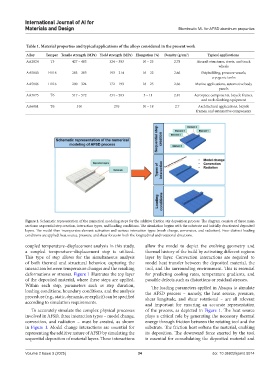
            Figure 1. Schematic representation of the numerical modeling steps for the additive friction stir deposition process. The diagram consists of three main
            sections: sequential step creation, interaction types, and loading conditions. The simulation begins with the substrate and initially deactivated deposited
            layers. The model then incorporates element activation and various interaction types (mesh change, conversion, and radiation). Four distinct loading
            conditions are applied: heat source, pressure, and shear forces in both the longitudinal and rotational directions.
            coupled temperature–displacement analysis in this study,   allow the model to depict the evolving geometry and
            a  coupled  temperature–displacement  step  is  utilized.   thermal history of the build by activating different regions
            This type of step allows for the simultaneous analysis   layer by layer. Convection interactions are required to
            of both thermal and structural behavior, capturing the   model heat transfer between the deposited material, the
            interaction between temperature changes and the resulting   tool, and the surrounding environment. This is essential
            deformations or stresses. Figure 1 illustrates the top layer   for predicting cooling rates, temperature gradients, and
            of the deposited material, where these steps are applied.   possible defects such as distortions or residual stresses.
            Within each step, parameters such as step duration,   The loading parameters applied in Abaqus to simulate
            loading conditions, boundary conditions, and the analysis   the AFSD process – namely, the heat source, pressure,
            procedure (e.g., static, dynamic, or explicit) can be specified   shear longitude, and shear rotational – are all relevant
            according to simulation requirements.              and important  for ensuring an  accurate  representation
              To accurately simulate the complex physical processes   of the process, as depicted in  Figure  1. The heat source
            involved in AFSD, three interaction types – model change,   plays a critical role by generating the necessary thermal
            convection, and radiation – must be created, as shown   energy through friction between the rotating tool and the
            in  Figure  1. Model change interactions are essential for   substrate. The friction heat softens the material, enabling
            representing the additive nature of AFSD by simulating the   its deposition. The downward force exerted by the tool
            sequential deposition of material layers. These interactions   is essential for consolidating the deposited material and


            Volume 2 Issue 3 (2025)                         34                             doi: 10.36922/ijamd.5014

