


Page 44 - IJAMD-2-3
P. 44
International Journal of AI for
            Materials and Design                                             Biomimetic ML for AFSD aluminum properties


            required bonding quality. By studying stress distributions,   suggest that higher specific heat values tend to reduce stress
            process parameters such as tool rotation speed, feed rate,   accumulation. Materials with higher thermal capacity
            and applied force can be optimized to ensure uniform   appear to distribute heat more uniformly, thereby resulting
            deposition and minimize defects.                   in lower peak stresses. This observation underscores
              Logarithmic strain, also known as true strain, is equally   the critical role of specific heat in thermal management
            important due to the large deformations involved in AFSD.   during AFSD. Optimizing this parameter is essential for
            Logarithmic strain offers a precise measure of material   enhancing thermal stability and determining whether the
            deformation, especially in scenarios involving extensive   material can withstand thermal stresses without failure.
            plastic deformation. Analyzing strain distribution helps   In this study, reliable and efficient coupled algorithms
            identify regions experiencing high deformation, which   were developed by combining decision tree (DT) regression
            is critical for ensuring the structural integrity of the   and RF regression with GA optimization to predict von
            deposited material. Understanding strain behavior also   Mises stress and logarithmic strain in the AFSD process.
            aids in characterizing the material response under high-  The input parameters included elastic modulus, specific
            strain and temperature conditions, which is essential for   heat, shear translation, shear rotation, and heat source – all
            process optimization and achieving the desired material   representing key physical and process characteristics of the
            properties in the final structure.                 alloys under consideration. By combining the predictive

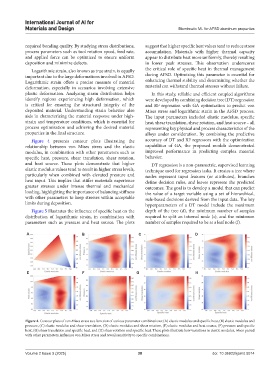
              Figure  4 presents contour plots illustrating the   accuracy of DT and RF regressors with the optimization
            relationship between von Mises stress and the elastic   capabilities of GA, the proposed models demonstrated
            modulus, in combination with other parameters such as   improved  performance  in  predicting  complex  material
            specific heat, pressure, shear translation, shear rotation,   behavior.
            and heat source. These plots demonstrate that higher   DT regression is a non-parametric, supervised learning
            elastic modulus values tend to result in higher stress levels,   technique used for regression tasks. It creates a tree where
            particularly when combined with elevated pressure and   nodes  represent input  features  (or attributes), branches
            heat input. This implies that stiffer materials experience   define decision rules, and leaves represent the predicted
            greater stresses under intense thermal and mechanical   outcomes. The goal is to develop a model that can predict
            loading, highlighting the importance of balancing stiffness   the value of a target variable using a set of hierarchical,
            with other parameters to keep stresses within acceptable   rule-based decisions derived from the input data. The key
            limits during deposition.                          hyperparameters of a DT model include the maximum
              Figure 5 illustrates the influence of specific heat on the   depth of the tree (d), the minimum number of samples
            distribution of logarithmic strain, in combination with   required to split an internal node (s), and the minimum
            parameters such as pressure and heat source. The plots   number of samples required to be at a leaf node (l).


            A                       B                       C                       D


            E                       F                      G                        H


            Figure 4. Contour plots of von Mises stress as a function of various parameter combinations: (A) elastic modulus and specific heat, (B) elastic modulus and
            pressure, (C) elastic modulus and shear translation, (D) elastic modulus and shear rotation, (E) elastic modulus and heat source, (F) pressure and specific
            heat, (G) shear translation and specific heat, and (H) shear rotation and specific heat. These plots illustrate how variations in elastic modulus, when paired
            with other parameters, influence von Mises stress and reveal sensitivity to specific combinations.


            Volume 2 Issue 3 (2025)                         38                             doi: 10.36922/ijamd.5014

