


Page 46 - IJB-1-1
P. 46
Bioprinting with pre-cultured cellular constructs towards tissue engineering of hierarchical tissues


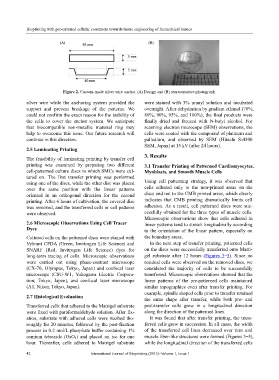
                            Figure 2. Custom-made silver wire anchor. (A) Design and (B) representative photograph.

            silver  wire  while  the  anchoring  system  provided  the   were  stained  with  3%  uranyl  solution  and  incubated
            support and  prevent  breakage of the patterns.  We   overnight. After dehydration by gradient ethanol (70%,
            could not confirm the exact reason for the inability of   80%, 90%, 95%, and 100%), the final products were
            the cells to  cover the anchor system.  We anticipate   finally dried  and  freezed  with  N-butyl alcohol. For
            that biocompatible non-metallic material ring  may   scanning electron microcope (SEM) observations, the
            help to overcome this issue. Our future research will   cells were coated with the compound of platinum and
            continue in this direction.                        palladium,  and observed by SEM (Hitachi  S-4500
                                                               SEM, Japan) at 15 kV (after 24 hours).
            2.5 Laminating Printing
                                                               3. Results
            The feasibility of laminating printing by transfer cell
            printing was examined  by preparing two different   3.1 Transfer Printing of Patterned Cardiomyocytes,
            cell-patterned culture discs in which SMCs were cul-  Myoblasts, and Smooth Muscle Cells
            tured  on.  The first transfer printing  was performed
            using one of the discs, while the other disc was placed   Using  cell patterning  strategy,  it was observed  that
            over  the same position  with  the linear patterns   cells adhered only  to the  non-printed  areas on  the
            oriented in an orthogonal  direction for the second   discs and not to the CMB printed areas, which clearly
            printing. After 6 hours of cultivation, the covered disc   indicates that CMB printing  dramatically  limits  cell
            was removed, and the transferred cells or cell patterns   adhesion.  As  a  result, cell  patterned discs  were  suc-
            were observed.                                     cessfully obtained for the three types of muscle cells.
                                                               Microscopic  observations  show  that  cells  adhered  in
            2.6 Microscopic Observations Using Cell Tracer     linear patterns tend to stretch longitudinally according
            Dyes                                               to  the orientation  of the linear pattern,  especially  on
            Cultured cells on the patterned discs were stained with   the boundary areas.
            Vybrant CFDA (Green, Invitrogen Life Science) and    In the next step of transfer printing, patterned cells
            SNARF  (Red,  Invitrogen  Life  Science)  dyes  for   on the discs were successfully transferred onto Matri-
            long-term  tracing  of cells.  Microscopic observations   gel substrate after 12 hours (Figures  3–5). Since no
            were carried out using phase-contrast microscope   residual cells were observed on the removed discs, we
            (CX-70,  Olympus,  Tokyo,  Japan)  and  confocal  laser   considered  the majority of  cells  to  be successfully
            microscope (CSU-W1, Yokogawa Electric Corpora-     transferred. Microscopic observations showed that the
            tion, Tokyo, Japan), and  confocal  laser  microscope   linear patterns of the pre-patterned  cells  maintained
            (A1, Nikon, Tokyo, Japan).                         similar  topographies even after transfer printing.  For
                                                               example, spindle shaped cells prior to transfer retained
            2.7 Histological Evaluation
                                                               the same  shape after transfer, while both pre-  and
            Transferred cells that adhered to the Matrigel substrate   post-transfer cells grew  in  a longitudinal direction
            were fixed with paraformaldehyde solution. After fix-  along the direction of the patterned lines.
            ation, substrate with adhered cells were washed tho-  It was found that after transfer printing, the trans-
            roughly for 20 minutes, followed by the post-fixation   ferred cells grew in succession. In all cases, the width
            process in 0.2 mol/L phosphate buffer containing 1%   of the transferred  cell lines decreased over time and
            osmium  tetroxide (OsO 4) and placed on ice for one   muscle fiber-like structures were formed (Figures 3–5),
            hour. Thereafter, cells  adhered  to  Matrigel  substrate   while the longitudinal direction of the transferred cells

            42                          International Journal of Bioprinting (2015)–Volume 1, Issue 1

