


Page 47 - IJB-1-1
P. 47
Makoto Nakamura, Tanveer  A.  Mir, Kenichi Arai,  et al.

            was unchanged in most cases. In addition, spontane-
            ous contractions by the CMs were also observed, al-
            though those were limited to only partial portions of
            the fiber-like structures. However, in the case of CMs
            and MBs, it was observed that some of the cells had
            spread to the Matrigel substrate.
               The use of silver wire as an  anchor was signifi-
            cantly effective in maintaining the fiber-like structures.
            The design and representative photograph are shown
            in Figure 2. Without use of an anchor, fiber-like struc-
            tures produced with transferred cells became wrinkled
            over time, and finally formed tangled or aggregated
            groups of cells after 24 hours (Figure 6(A-1), 6(A-2)),

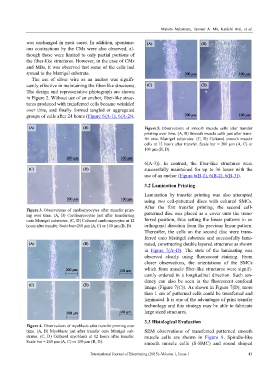
                                                               Figure 5. Observations  of smooth muscle cells after transfer
                                                               printing over time. (A, B) Smooth muscle cells just after trans-
                                                               fer onto Matrigel substrates. (C,  D)  Cultured smooth muscle
                                                               cells at 12 hours after transfer. Scale bar = 200 µm (A, C) or
                                                               100 µm (B, D).

                                                               6(A-3)). In contrast, the fiber-like structures were
                                                               successfully maintained  for  up  to  36  hours  with  the
                                                               use of an anchor (Figure 6(B-1), 6(B-2), 6(B-3)).
                                                               3.2 Lamination Printing

                                                               Lamination  by transfer printing  was also  attempted
                                                               using two cell-patterned discs with cultured SMCs.
                                                               After the first transfer printing,  the second cell-
            Figure 3. Observations of cardiomyocytes after transfer print-
            ing  over time.  (A, B)  Cardiomyocytes just after transferring   patterned  disc was placed as a cover onto  the trans-
            onto Matrigel substrates. (C, D) Cultured cardiomyocytes at 12   ferred  position,  thus  setting  the  linear  patterns  in  an
            hours after transfer. Scale bar=200 µm (A, C) or 100 µm (B, D).     orthogonal direction from the previous linear pattern.
                                                               Thereafter,  the cells  on  the second  disc were trans-
                                                               ferred onto Matrigel substrate and successfully  lami-
                                                               nated, constructing double layered structures as shown
                                                               in  Figure  7(A–D).  The state of the laminating  was
                                                               observed  clearly  using fluorescent staining.  From
                                                               closer  observations, the orientations of the SMCs
                                                               which form muscle fiber-like structures were signifi-
                                                               cantly  ordered in a longitudinal direction. Such ten-
                                                               dency can  also  be seen  in  the  fluorescent confocal
                                                               image (Figure 7(C)). As shown in Figure 7(D), more
                                                               than 1 cm of patterned cells could be transferred and
                                                               laminated. It is one of the advantages of print transfer
                                                               technology and this strategy may be able to fabricate
                                                               large sized structures.

                                                               3.3 Histological Evaluation
            Figure 4. Observations of myoblasts after transfer printing over
            time. (A,  B)  Myoblasts just after transfer onto Matrigel sub-  SEM  observations  of transferred  patterned  smooth
            strates. (C,  D)  Cultured myoblasts at 12 hours after transfer.   muscle cells  are shown in  Figure  8.  Spindle-like
            Scale bar = 200 µm (A, C) or 100 µm (B, D).        smooth muscle  cells (S-SMC) and round shaped

                                        International Journal of Bioprinting (2015)–Volume 1, Issue 1      43

