


Page 55 - IJB-1-1
P. 55
Edgar Y. S. Tan and Wai Yee Yeong


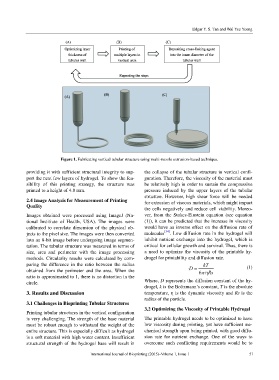
                           Figure 1. Fabricating vertical tubular structure using multi-nozzle extrusion-based technique.

            providing it with sufficient structural integrity to sup-  the collapse of the tubular structure in vertical confi-
            port the next few layers of hydrogel. To show the fea-  guration. Therefore, the viscosity of the material must
            sibility of this printing  strategy, the structure was   be relatively high in order to sustain the compressive
            printed to a height of 4.8 mm.                     pressure  induced by  the upper layers of the tubular
                                                               structure. However, high  shear force will be needed
            2.4 Image Analysis for Measurement of Printing     for extrusion of viscous materials, which might impact
            Quality
                                                               the cells negatively and reduce cell viability. Moreo-
            Images obtained were  processed using  ImageJ (Na-  ver, from the Stokes-Einstein equation (see  equation
            tional Institiute of  Health, USA). The images were   (1)), it can be predicted that the increase in viscosity
            calibrated  to  correlate dimension  of the  physical ob-  would have an inverse effect on the diffusion rate of
            jects to the pixel size. The images were then converted   molecules [34] . Low diffusion rate in the hydrogel will
            into an 8-bit image before undergoing image segmen-  inhibit nutrient exchange into the hydrogel, which is
            tation. The tubular structure was measured in terms of   critical for cellular growth and survival. Thus, there is
            size, area and  perimeter with  the image processing   a need to optimize the viscosity of the printable hy-
            methods. Circularity results were calculated by com-  drogel for printability and diffusion rate.
            paring the difference in the ratio between the radius                                         (1)
            obtained  from the perimeter  and  the  area. When  the
            ratio is approximated to 1, there is no distortion in the
            circle.                                            Where, D represents the diffusion constant of the hy-
                                                               drogel, k is the Boltzmann’s constant, T is the absolute
            3. Results and Discussion                          temperature, η is the dynamic viscosity and Rs is the
                                                               radius of the particle.
            3.1 Challenges in Bioprinting Tubular Structures
                                                               3.2 Optimizing the Viscosity of Printable Hydrogel
            Printing tubular structures in the vertical configuration
            is very challenging. The strength of the base material   The printable hydrogel needs to be optimized to have
            must be robust enough to withstand the weight of the   low viscosity during printing, yet have sufficient me-
            entire structure. This is especially difficult as hydrogel   chanical strength upon being printed, with good diffu-
            is a soft material with high water content. Insufficient   sion rate for nutrient exchange. One of the ways to
            structural strength of the hydrogel base will result in   overcome such conflicting requirements would be to

                                        International Journal of Bioprinting (2015)–Volume 1, Issue 1      51

