


Page 72 - IJB-1-1
P. 72
A novel bioactive PEEK/HA composite with controlled 3D interconnected HA network


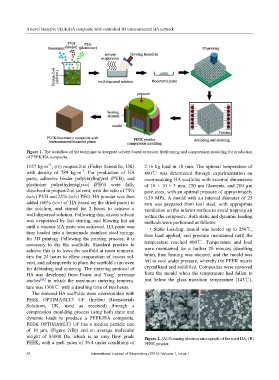
            Figure 1. The workflow of the technique to integrate solvent-based extrusion freeforming and compression moulding for production
            of PEEK/HA composite.
                      –3
            1127 kg·m ; (iv) propan-2-ol (Fisher Scientific, UK)   2.16 kg load in 10 min.  The optimal temperature of
                                    –3
            with density of 789 kg·m .  For production of  HA   400℃  was determined through experimentation on
            paste, adhesive binder polyvinylbutyral (PVB), and   overmoulding HA scaffolds with external dimensions
            plasticizer polyethyleneglycol (PEG) were fully    of 10 × 10 × 3 mm, 250 µm filaments, and 200 µm
            dissolved in propan-2-ol solvent, with the ratio of 75%   pore sizes, with an optimal pressure of approximately
            (w/v) PVB and 25% (w/v) PEG. HA powder was then    0.39 MPa.  A mould with an internal diameter of 25
            added (60% (v/v) of HA based on the dried paste) to   mm was prepared from tool steel, with appropriate
            the  solution,  and stirred for 2 hours to achieve a   ventilation on the inferior surface to avoid trapping air
            well-dispersed solution. Following this, excess solvent   within the composite. Both static and dynamic loading
            was  evaporated  by  fast  stirring,  and  blowing  hot  air   methods were performed as follows:
            until a viscous HA paste was achieved. HA paste was   •  Static  Loading:  mould  was  heated  up  to  250℃,
            then loaded  into  a homemade stainless steel syringe   then load applied, and  pressure maintained until the
            for 3D printing. Following the printing process, it is
            necessary  to  dry the scaffolds.  Standard  practice to   temperature reached 400℃. Temperature and  load
            achieve this is to leave the scaffold at room tempera-  were maintained for  a  further 20  minutes  (dwelling
            ture for 24 hours to allow evaporation of excess sol-  time), then heating was stopped, and the mould was
            vent, and subsequently to place the scaffold in an oven   left to cool under pressure, whereby the PEEK matrix
            for debinding and sintering. The sintering protocol of   crystallized and solidified. Composites were removed
            HA  was  developed  from  Evans and  Yang’  previous   from  the  mould when the temperature had fallen to
            studies [22]   in  which  the  maximum  sintering  tempera-  just below the glass transition temperature (143℃),
            ture was 1300℃  with a dwelling time of two hours.
               The sintered HA scaffolds were overmoulded with
            PEEK OPTIMA®LT3  UF (Invibio  Biomaterials
            Solutions,  UK, used as received) through a
            compression  moulding  process  using  both  static  and
            dynamic loads to produce a  PEEK/HA composite.
            PEEK OPTIMA®LT3 UF has a median particle size
            of 10  µm,  (Figure 2(B)) and  an average molecular
            weight of 83000 Da, which is an easy flow grade    Figure 2. (A) Scanning electron micrograph of the used HA, (B)
            PEEK, with a melt index of 36.4 under conditions of   PEEK powder.

            68                          International Journal of Bioprinting (2015)–Volume 1, Issue 1

