


Page 84 - IJB-1-1
P. 84
Creation of a vascular system for organ manufacturing


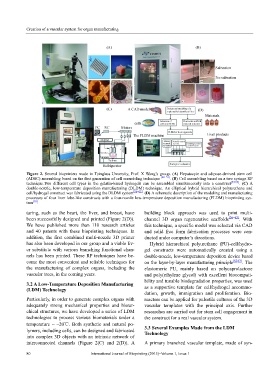
            Figure 2. Several bioprinters made in Tsinghua Unversity, Prof. X Wang’s group. (A) Hepatocyte and adipose-derived stem cell
            (ADSC) assembling based on the first generation of cell assembling technique  [40–51] . (B) Cell assembling based on a two syringe RP
            technique.Two different cell types in the  gelatin-based hydrogels  can be assembled simultaneously into a construct [52,53] .  (C)  A
            double-nozzle,  low-temperature  deposition manufacturing (DLDM) technique.  An  elliptical  hybrid hierarchical polyurethane and
            cell/hydrogel construct was fabricated using the DLDM system [56–63] . (D) A schematic description of the modeling and manufacturing
            processes of four liver lobe-like constructs with a four-nozzle low-temperature deposition manufacturing (FLDM) bioprinting sys-
            tem [10] .

            turing, such as the heart,  the  liver,  and breast, have   building  block  approach  was used to print  multi-
            been successfully designed and printed (Figure 2(D)).   channel  3D  organ regenerative scaffolds [56–63] .  With
            We have published more than  110 research articles   this technique, a specific model was selected via CAD
            and 40  patents  with these  bioprinting techniques.  In   and  solid  free form  fabrication  processes were con-
            addition, the first combined multi-nozzle 3D printer   ducted under computer’s directions.
            has also been developed in our group and a viable liv-  Hybrid  hierarchical polyurethane (PU)-cell/hydro-
            er substitute with various branching functional chan-  gel  constructs  were automatically  created  using  a
            nels has been printed. These RP techniques have be-  double-nozzle, low-temperature deposition device based
            come the most convenient and reliable techniques for   on the layer-by-layer manufacturing principle [62,63] . The
            the  manufacturing of  complex organs,  including the   elastomeric PU, mainly based on polycaprolactone
            vascular trees, in the coming years.               and poly(ethylene glycol) with excellent biocompati-
                                                               bility and tunable biodegradation properties, was used
            3.2 A Low-Temperature Deposition Manufacturing
            (LDM) Technology                                   as a supportive template for cell/hydrogel accommo-
                                                               dation, growth, immigration and proliferation.  Bio-
            Particularly, in order to generate complex organs with   reactors can be applied for pulsatile cultures of the 3D
            adequately  strong mechanical properties and hierar-  vascular templates with  the principal  axis. Further
            chical structures, we have developed a series of LDM   researches are carried out for stem cell engagement in
            technologies  to  process  various  biomaterials  under  a   the construct for a real vascular system.
            temperature ~ –20℃. Both synthetic and natural po-
            lymers, including cells, can be designed and fabricated   3.3 Several Examples Made from the LDM
                                                               Technology
            into complex 3D objects with an intrinsic network of
            interconnected  channels  (Figure  2(C) and  2(D)).  A   A primary branched vascular template, made of syn-

            80                          International Journal of Bioprinting (2015)–Volume 1, Issue 1

