


Page 394 - IJB-10-1
P. 394
International Journal of Bioprinting                                    In situ bioprinting for cartilage repair


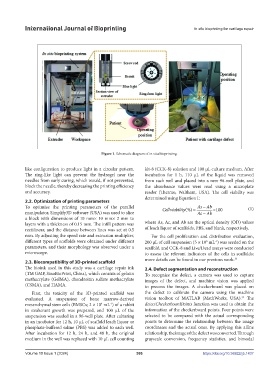
                                            Figure 1. Schematic diagram of in situ bioprinting.


            like configuration to produce light in a circular pattern.   kit-8 (CCK-8) solution and 100 μL culture medium. After
            The ring-like light can prevent the hydrogel near the   incubation for 1 h, 110 μL of the liquid was removed
            needles from early curing, which would, if not prevented,   from each well and placed into a new 96-well plate, and
            block the needle, thereby decreasing the printing efficiency   the absorbance values were read using a microplate
            and accuracy.                                      reader (Thermo, Waltham, USA). The cell viability was
                                                               determined using Equation I:
            2.2. Optimization of printing parameters
            To optimize the printing parameters of the parallel       Cellviability(%)   As Ab  100     (1)
            manipulator, Simplify3D software (USA) was used to slice                 Ac Ab

            a block with dimensions of 10 mm× 10 mm× 2 mm to
            layers with a thickness of 0.15 mm. The infill pattern was   where As, Ac, and Ab are the optical density (OD) values
            rectilinear, and the distance between lines was set at 0.5   of leach liquor of scaffolds, PBS, and blank, respectively.
            mm. By adjusting the speed rate and extrusion multiplier,   For the cell proliferation and distribution evaluation,
            different types of scaffolds were obtained under different   200 μL of cell suspension (5 × 10  mL ) was seeded on the
                                                                                             -1
                                                                                         5
            parameters, and their morphology was observed under a   scaffold, and CCK-8 and Live/Dead assays were conducted
            microscope.                                        to assess the relevant indicators of the cells in scaffolds;
            2.3. Biocompatibility of 3D-printed scaffold       more details can be found in our previous work. 33
            The bioink used in this study was a cartilage repair ink   2.4. Defect segmentation and reconstruction
            (TM GMP, SinoBioPrint, China), which consists of gelatin   To recognize the defect, a camera was used to capture
            methacrylate (GelMA), chondroitin sulfate methacrylate   images of the defect, and machine vision was applied
            (CSMA), and HAMA.                                  to process the images. A checkerboard was placed on
               First, the toxicity of the 3D-printed scaffold was   the  defect  to  calibrate the camera  using  the machine
                                                                                                        34
            evaluated.  A  suspension  of  bone  marrow-derived   vision toolbox of MATLAB (MathWorks, USA).  The
            mesenchymal stem cells (BMSCs; 2 × 10  mL ) of a rabbit   detectCheckerboardPoints function was used to obtain the
                                                -1
                                            4
            in exuberant growth was prepared, and 100 μL of the   information of the checkerboard points. Four points were
            suspension was seeded in a 96-well plate. After culturing   selected to be compared with the actual corresponding
            in an incubator for 12 h, 10 μL of scaffold leach liquor or   points to determine the relationship between the image
            phosphate-buffered saline (PBS) was added to each well.   coordinates and the actual ones. By applying this affine
            After incubation for 12 h, 24 h, and 48 h, the original   relationship, the image of the defect was converted. Through
            medium in the well was replaced with 10 μL cell counting   grayscale conversion, frequency statistics, and bimodal


            Volume 10 Issue 1 (2024)                       386                          https://doi.org/10.36922/ijb.1437

