


Page 92 - IJB-2-2
P. 92
Morphological, mechanical and biological assessment of PCL/pristine graphene scaffolds for bone regeneration

                                                                                         ∆ h
                                                                                     ε =                  (3)
                                                                                         h 0
                                                               where A is the initial sample cross section area and Δh
                                                               is  the  scaffold height variation. The obtained stress-
                                                               strain  data was  further processed to determine  the
                                                               compression modulus, E c, according to the procedure
                                                                                        [7]
                                                               previously reported by Fiedler .
                                                               2.7 Biological Test (In Vitro)
                                                               Scaffold Preparation
                                                               For biological tests, PCL  and PCL/pristine  graphene
                                                               scaffolds were cut into small blocks (11 mm × 11 mm

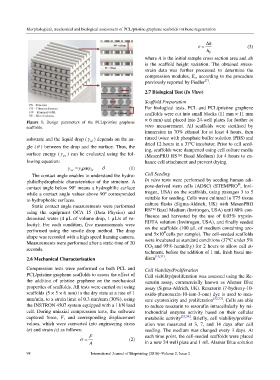
            Figure 1.  Design parameters  of the PCL/pristine graphene   × 6 mm) and placed into 24-well plates for further in
            scaffolds.                                         vitro  measurement. All scaffolds were  sterilised by
                                                               immersion in 70% ethanol for at  least  4 hours,  then
            substrate and the liquid drop (γ ) depends on the an-  rinsed twice with phosphate buffer solution (PBS) and
                                       sl
            gle (θ ) between the drop and the surface. Thus, the   dried 12 hours in a 37ºC incubator. Prior to cell seed-
                                                               ing, scaffolds were dampened using cell culture media
            surface energy (γ sv ) can be evaluated using the fol-  (MesenPRO RS™ Basal Medium) for 4 hours to en-
            lowing equation:                                   hance cell attachment and prevent drying.
                              γ  sv    .cosγ =  sl  γ +  lv  θ     (1)
               The contact angle enables to understand the hydro-  Cell Seeding
            philic/hydrophobic  characteristics  of the structure. A   In vitro tests were performed by seeding human adi-
                                                                                                      ®
            contact angle below 90º means a hydrophilic surface   pose-derived  stem cells (ADSC) (STEMPRO , Invi-
            while a contact angle values above 90º corresponded   trogen, USA) on the scaffolds, using passages 3 to 5
            to hydrophobic surfaces.                           suitable for seeding. Cells were cultured in T75 tissue
               Static contact angle measurements were performed   culture  flasks  (Sigma-Aldrich,  UK)  with MesenPRO
            using  the equipment OCA 15 (Data  Physics) and    RS™ Basal Medium (Invitrogen, USA) until 80% con-
            deionised water (4 µL of volume drop, 1 µL/s of ve-  fluence  and harvested by  the use of 0.05% trypsin-
            locity). For each condition, five measurements were   EDTA solution (Invitrogen, USA), and finally seeded
            performed using  the sessile drop method. The  drop   on the scaffolds (100 µL of medium containing aro-
                                                                       4
            shape was recorded with a high speed framing camera.   und 5×10 cells per sample). The cell-seeded scaffolds
            Measurements were performed after a static time of 20   were incubated at standard conditions (37ºC under 5%
                                                               CO 2 and 95% humidity) for 2 hours to allow cell at-
            seconds.
                                                               tachment, before the addition of 1 mL fresh basal me-
            2.6 Mechanical Characterisation                    dium [16,31] .

            Compression tests were performed on both PCL and   Cell Viability/Proliferation
            PCL/pristine graphene scaffolds to assess the effect of   Cell viability/proliferation was assessed using the Re-
            the addition of pristine graphene  on  the  mechanical   sazurin assay, commercially known as  Alamar Blue
            properties of scaffolds. All tests were carried out using   assay (Sigma-Aldrich, UK). Resazurin (7-hydroxy-10-
            scaffolds (5 × 5 × 6 mm) in the dry state at a rate of 1   oxido-phenoxazin-10-ium-3-one) dye is used to mea-
            mm/min, to a strain limit of 0.3 mm/mm (30%), using   sure cytotoxicity and proliferation [32,33] . Cells are able
            the INSTRON 4507 system equipped with a 1 kN load   to reduce resazurin to resorufin intracellularly by mi-
            cell. During  uniaxial compression tests, the  software   tochondrial enzyme activity based  on their cellular
            captured force,  F, and corresponding  displacement   metabolic activity [33,34] . Briefly, cell viability/prolifer-
            values, which were converted into engineering stress   ation was measured at 3,  7, and 14  days after cell
            (σ) and strain (ε) as follows:                     seeding. The medium was changed every 3 days. At
                                       F                       each time point, the cell-seeded scaffolds were placed
                                   σ =                  (2)
                                       A                       in a new 24 well plate and 1 mL Alamar Blue solution

            98                          International Journal of Bioprinting (2016)–Volume 2, Issue 2

