


Page 505 - IJB-10-2
P. 505
International Journal of Bioprinting                               Mineralization of 3D-printed PHA scaffolds


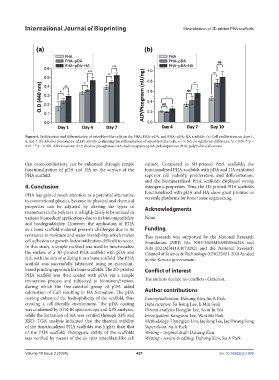
            Figure 6. Proliferation and differentiation of osteoblast-like cells on the PHA, PHA–pDA, and PHA–pDA–HA scaffolds. (a) Cell proliferation on days 1,
            4, and 7. (b) Alkaline phosphatase (ALP) activity confirming the differentiation of osteoblast-like cells. n = 5; NS, no significant difference; *p < 0.05; **p <
            0.01; ***p < 0.001. Abbreviations: ALP, alkaline phosphatase; HA, hydroxyapatite; pDA, polydopamine; PHA, polyhydroxyalkanoate.


            that osteoconductivity can be enhanced through simple   culture. Compared to 3D-printed PHA scaffolds, the
            functionalization of pDA and HA on the surface of the   functionalized PHA scaffolds with pDA and HA exhibited
            PHA scaffold.                                      superior  cell  viability,  proliferation,  and  differentiation,
                                                               and the biomineralized PHA scaffolds displayed strong
            4. Conclusion                                      osteogenic properties. Thus, the 3D-printed PHA scaffolds
                                                               functionalized with pDA and HA show great promise as
            PHA has gained much attention as a potential alternative   versatile platforms for bone tissue engineering.
            to conventional plastics, because its physical and chemical
            properties can be adjusted by altering the types of   Acknowledgments
            monomers in the polymer. It is highly likely to be utilized in
            various biomedical applications due to its biocompatibility   None.
            and biodegradability. However, the application of PHA
            as a bone scaffold material presents challenges due to its   Funding
            resistance to moisture and water insolubility, which makes   This research was supported by the National Research
            cell adhesion or growth factor infiltration difficult to occur.   Foundation (NRF; No. NRF-2019M3A9E2066348 and
            In this study, a simple method was used to functionalize   NRF-2021M3H4A4079292)  and the  National  Research
            the surface of a 3D-printed PHA scaffold with pDA and   Council of Science & Technology (CRC22021-200) funded
            HA, with the aim of utilizing it as a bone scaffold. The PHA   by the Korean government.
            scaffold  was  successfully fabricated using an  extrusion-
            based printing approach for bone scaffolds. The 3D-printed   Conflict of interest
            PHA scaffold was then coated with pDA via a simple
            immersion  process  and  subjected  to  biomineralization,   The authors declare no conflicts of interest.
            during which the free-catechol group of pDA aided
            calcination of CaP, resulting in HA formation. The pDA   Author contributions
            coating enhanced the hydrophilicity of the scaffold, thus   Conceptualization: Dahong Kim, Su A Park
            creating a cell-friendly environment. The pDA coating   Data curation: Su Jeong Lee, Ji Min Seok
            was confirmed by ATR-IR spectroscopy and XPS analyses,   Formal analysis: Dongjin Lee, Seon Ju Yeo
            while the formation of HA was verified through XPS and   Investigation: Kangwon Lee, Won Ho Park
            XRD. TGA analysis indicated that the thermal stability   Methodology: Hyungjun Lim, Jae Jong Lee, Jae Hwang Song
            of the functionalized PHA scaffolds was higher than that   Supervision: Su A Park
            of the PHA scaffold. Osteogenic ability of the scaffolds   Writing – original draft: Dahong Kim
            was verified by means of the in vitro  osteoblast-like cell   Writing – review & editing: Dahong Kim, Su A Park


            Volume 10 Issue 2 (2024)                       497                                doi: 10.36922/ijb.1806

