


Page 518 - IJB-10-2
P. 518
International Journal of Bioprinting                          Oozing 3D-printed scaffolds for tissue engineering


              A                                              B


                  Stress (MPa)                                   Stress (MPa)


                                   Deformation (% )                             Deformation (% )
              C
                                                                        2
                                  E modulus (MPa)           Max Stress  (N/mm )      Max dL at Fmax (mm)
                   Specimen
                              Ctrl  SD    NaOH   SD     Ctrl  SD    NaOH    SD    Ctrl   SD   NaOH    SD
                      Or     1.97   0.30  1.81   0.40  27.93  0.38  27.61  0.13   8.35  0.14   8.62  0.13
                      Oc     2.86   0.68  3.04   0.21  4.49   0.39   3.99  0.48   1.26  0.17   1.11  0.17
                      Os     3.85   1.57  3.23   1.02  2.36   0.30   1.93  0.29   0.97  0.17   0.84  0.14
                      Gy     17.64  1.51  5.78   1.51  27.90  11.37  32.84  0.31  7.00  3.43   8.48  0.21
                      Gof    57.56  95.19  25.31  27.08  21.15  12.10  25.73  10.53  4.92  3.85  6.59  3.26

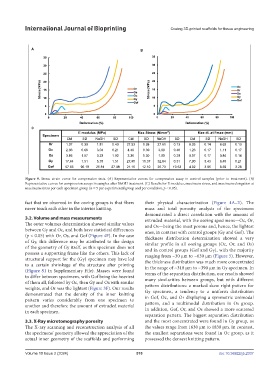
            Figure 9.  Stress–strain curve for compression tests. (A) Representative curves for compression assay in control samples (prior to treatment). (B)
            Representative curves for compression assays in samples after NaOH treatment. (C) Results for E modulus, maximum stress, and maximum elongation at
            maximum stress per each specimen group (n = 5 per experimental group and per condition, p < 0.05).


            fact that we observed in the oozing groups is that fibers   their  physical  characterization  (Figure  4A–E).  The
            never touch each other in the interior knitting.   mass and total porosity analysis of the specimens
                                                               demonstrated a direct correlation with the amount of
            3.2. Volume and mass measurements                  extruded material, with the oozing specimens—Oc, Or,
            The outer volumes determination showed similar values   and Os—being the most porous and, hence, the lightest
            between Gy and Oc, and both have statistical differences   ones, in contrast with control groups (Gy and Gof). The
            (p < 0.05) with Or, Os, and Gof (Figure 4F). In the case   thickness distribution determination showed a very
            of  Gy,  this  difference  may  be  attributed  to  the  design   similar profile in all oozing groups (Oc, Or, and Os)
            of the geometry of Gy itself, as this specimen does not   and in control groups (Gof and Gy), with the majority
            possess a supporting frame like the others. This lack of   ranging from ~30 µm to ~630 µm (Figure 5). However,
            structural support for the (Gy) specimen may have led   the thickness distribution was much more concentrated
            to a certain shrinkage of the structure after printing   in the range of ~310 µm to ~390 µm in Gy specimen. In
            (Figure S1 in Supplementary File). Masses were found   terms of the separation distribution, our results showed
            to differ between specimens, with Gof being the heaviest
            of them all, followed by Oc, then Gy and Os with similar   many similarities between groups, but with different
                                                               pattern distributions: a marked skew right pattern for
            weights, and Or was the lightest (Figure 3F). Our results
            demonstrated that the density of the inner knitting   Gy specimen, a tendency to  a uniform distribution
            pattern varies considerably from one specimen to   in Gof, Oc, and Or displaying a symmetric unimodal
            another and therefore the amount of extruded material   pattern, and a multimodal distribution in Os group.
            in each specimen.                                  In addition, Gof, Or, and Os showed a more scattered
                                                               separation pattern. The biggest separation distribution
            3.3. X-Ray microtomography porosity                and the most concentrated were found in Gy group, as
            The X-ray scanning and reconstruction analysis of all   the values range from 1630 µm to 1830 µm. In contrast,
            the specimens’ geometry allowed the appreciation of the   the smallest separations were found in Oc group, as it
            actual inner geometry of the scaffolds and performing   possessed the densest knitting pattern.


            Volume 10 Issue 2 (2024)                       510                                doi: 10.36922/ijb.2337

